
For R&D food scientists and formulators in the sports nutrition sector, developing a winning protein bar is a delicate balancing act. Consumers demand high protein, low sugar, and a robust fiber profile—specifically targeting a “high fiber” claim of 5 grams or more per serving.
However, adding significant quantities of fiber typically introduces a severe formulation flaw: bar hardening. Within weeks of manufacture, a once-pliable bar can transform into a dense, chalky, unpalatable brick. Resolving this texture compromise requires a functional ingredient that satisfies both the nutritional panel and shelf-life expectations.
To achieve a ≥5g fiber claim in protein bars without texture compromise, replace traditional binders with soluble tapioca fiber. It acts as a humectant and prebiotic binder, controlling water activity to prevent bar hardening over time while delivering high fiber compliance and a clean, neutral flavor profile.
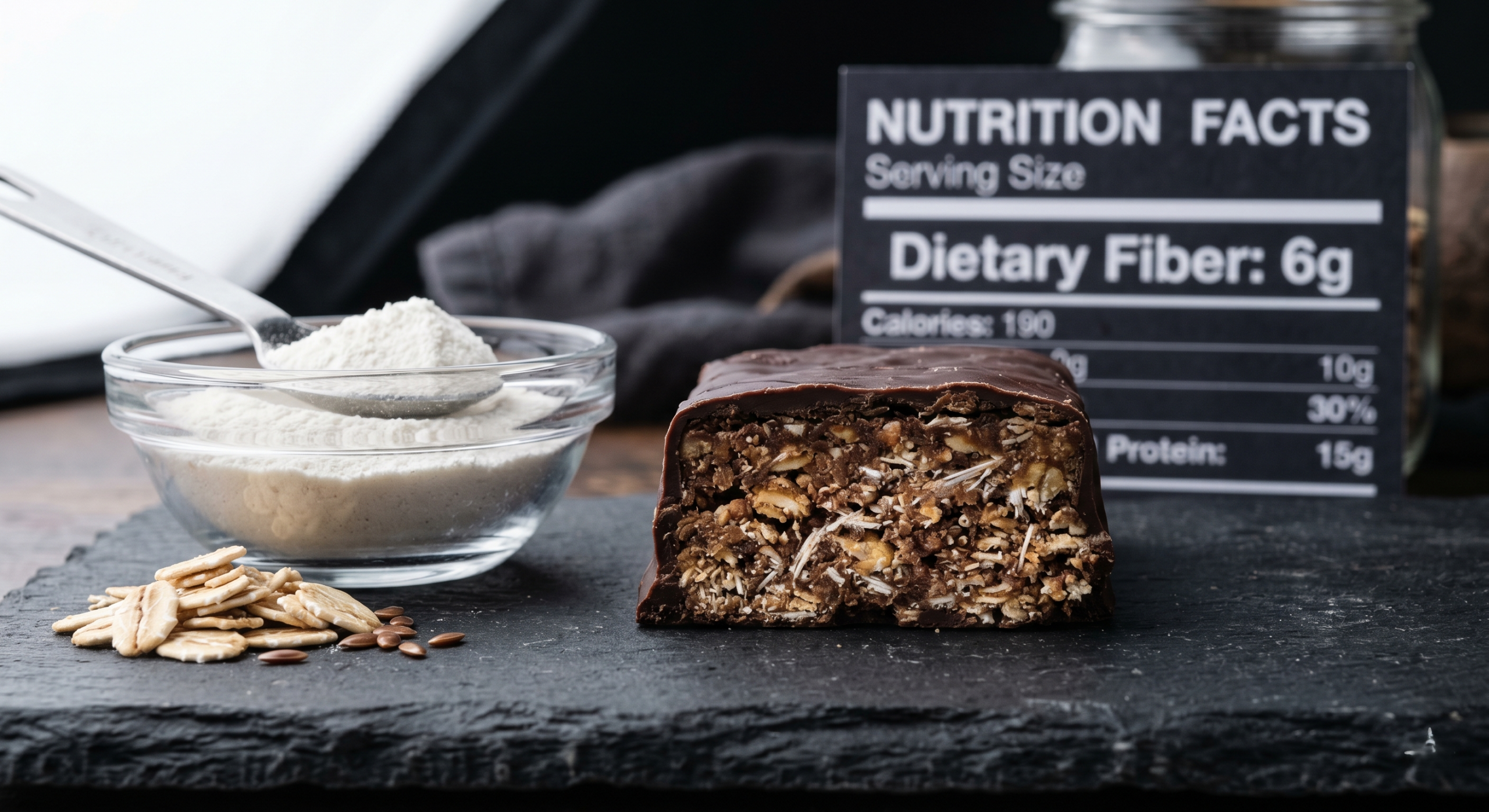
To understand why protein bars fail over time, you must look at water activity and protein aggregation. When formulating with high concentrations of whey protein isolate (WPI), milk protein isolate (MPI), or plant proteins (pea, soy), these proteins naturally compete for moisture.
Over time, moisture migrates from the carbohydrate syrup matrix toward the proteins. This process, combined with slow protein-to-protein cross-linking, causes the structural matrix to solidify.
When formulators attempt to hit a ≥5g fiber claim using standard bulking agents like inulin, chicory root fiber, or corn-based soluble fibers, they often exacerbate this issue. Many of these fibers are highly hygroscopic, accelerating water migration and yielding a crumbly, dry texture before the product even hits retail shelves.
Soluble tapioca fiber (often derived via enzymatic hydrolysis of tapioca starch into a resistant dextrin) offers a distinct molecular structure that directly mitigates the mechanics of bar hardening.
Exceptional Humectancy: It binds water tightly within the carbohydrate matrix, preventing moisture from migrating into the protein molecules. This maintains a soft, chewy texture over a 12-to-18-month shelf life.
Optimal Plasticity: Unlike crystalline fibers that can turn gritty, soluble tapioca fiber acts as an amorphous plasticizer. It provides the essential “stretch” and chewiness expected in premium confectionery and sports nutrition bars.
Low Viscosity at High Solids: It can be formulated at high Brix levels without causing excessive line pressure during extrusion, ensuring smooth manufacturing runs.
The choice of fiber is also a regulatory minefield. In recent years, regulatory bodies like the US FDA cracked down on synthetic or isolated fibers, demanding proof of beneficial physiological effects.
Unlike older generations of Isomalto-oligosaccharides (IMOs)—which the FDA reclassified as a sugar rather than a dietary fiber due to their glycemic impact—soluble tapioca fiber stands up to regulatory scrutiny. It provides true dietary fiber enrichment, allowing brands to confidently display “Excellent Source of Fiber” claims on front-of-pack labeling without risking non-compliance or deceptive marketing lawsuits.
When re-engineering your protein bar dough to include a ≥5g fiber claim, follow these three practical engineering rules:
To incorporate enough soluble tapioca fiber to yield 5g of pure fiber per serving, look at your overall binder liquid matrix. Soluble tapioca fiber syrup typically contains around 70% to 90% dietary fiber content depending on the grade. Swap out high-glycemic corn syrups or rice syrups completely, utilizing the tapioca fiber as your primary liquid carrier.
Aim for a final water activity ($a_w$) target between 0.60 and 0.65. If your water activity drops too low, the bar becomes instantly brittle. If it rises too high, you risk microbial growth and accelerated lipid oxidation. Soluble tapioca fiber stabilizes $a_w$ perfectly within this safe, pliable window.
If you are formulating a low-sugar or keto-friendly bar, you will likely combine soluble tapioca fiber with polyols like erythritol or glycerin. Soluble tapioca fiber works synergistically with polyols, masking the intense cooling effect of erythritol while preventing the sticky surface sweat often caused by excessive glycerin usage.
Solving complex rheological challenges requires more than commodity ingredients; it requires a reliable supply chain built on technical precision. Blue Highcrest provides premium, non-GMO soluble tapioca fiber specifically engineered for demanding food applications.
Our soluble tapioca fiber delivers a clean, subtly sweet flavor profile (approximately 20% to 30% the sweetness of sucrose) with zero off-notes or metallic aftertastes. This means you can cut back on artificial flavor maskers and keep your ingredient list exceptionally clean. Whether you are running a high-throughput cold-extrusion line or a traditional slab-and-slit operation, our fiber ensures consistent dough rheology batch after batch.
Stop guessing with your protein bar shelf-life testing. Contact the applications team at Blue Highcrest today to request a technical data sheet and a functional sample kit of our Soluble Tapioca Fiber. Let us help you hit your nutritional targets without sacrificing the bite.
[Request a Soluble Tapioca Fiber Sample from Blue Highcrest]
Inulin is highly hygroscopic and fructan-based, meaning it readily releases or shifts moisture over time, accelerating protein crystallization. Soluble tapioca fiber forms a more stable, amorphous carbohydrate matrix that locks in moisture, maintaining bar pliability for a significantly longer shelf life.
No. High-quality soluble tapioca fiber consists of digestion-resistant linkages that pass through the upper gastrointestinal tract without being rapidly broken down into glucose. It maintains a very low glycemic index, making it ideal for keto, low-sugar, and diabetic-friendly formulations.
Yes. Plant-based proteins (like pea, rice, or fava bean) are notoriously dry and chalky. Soluble tapioca fiber is 100% plant-derived, non-GMO, and acts as an excellent humectant to overcome the inherently dry texture of plant protein isolates.
Our premium soluble tapioca fiber syrups are optimized to deliver high concentrations of dietary fiber (typically 70% to 90% on a dry basis), allowing you to hit a ≥5g fiber claim per serving easily without over-inflating the total carbohydrate count.