
For formulation chemists and beverage R&D managers in the functional beverage sector, creating a stable product requires solving complex liquid dynamics. Consumers expect functional ready-to-drink (RTD) beverages such as protein shakes, enhanced waters, and wellness shots to provide real health benefits without altering sensory quality. Adding dietary fiber often introduces unwanted side effects: cloudiness, sediment buildup, and product separation during heat treatment.
To achieve a “source of fiber” or “high fiber” claim without ruining the product, you need a highly stable texturizer. Soluble tapioca fiber provides the precise physical traits required to survive harsh beverage manufacturing while maintaining a clean, premium mouthfeel.
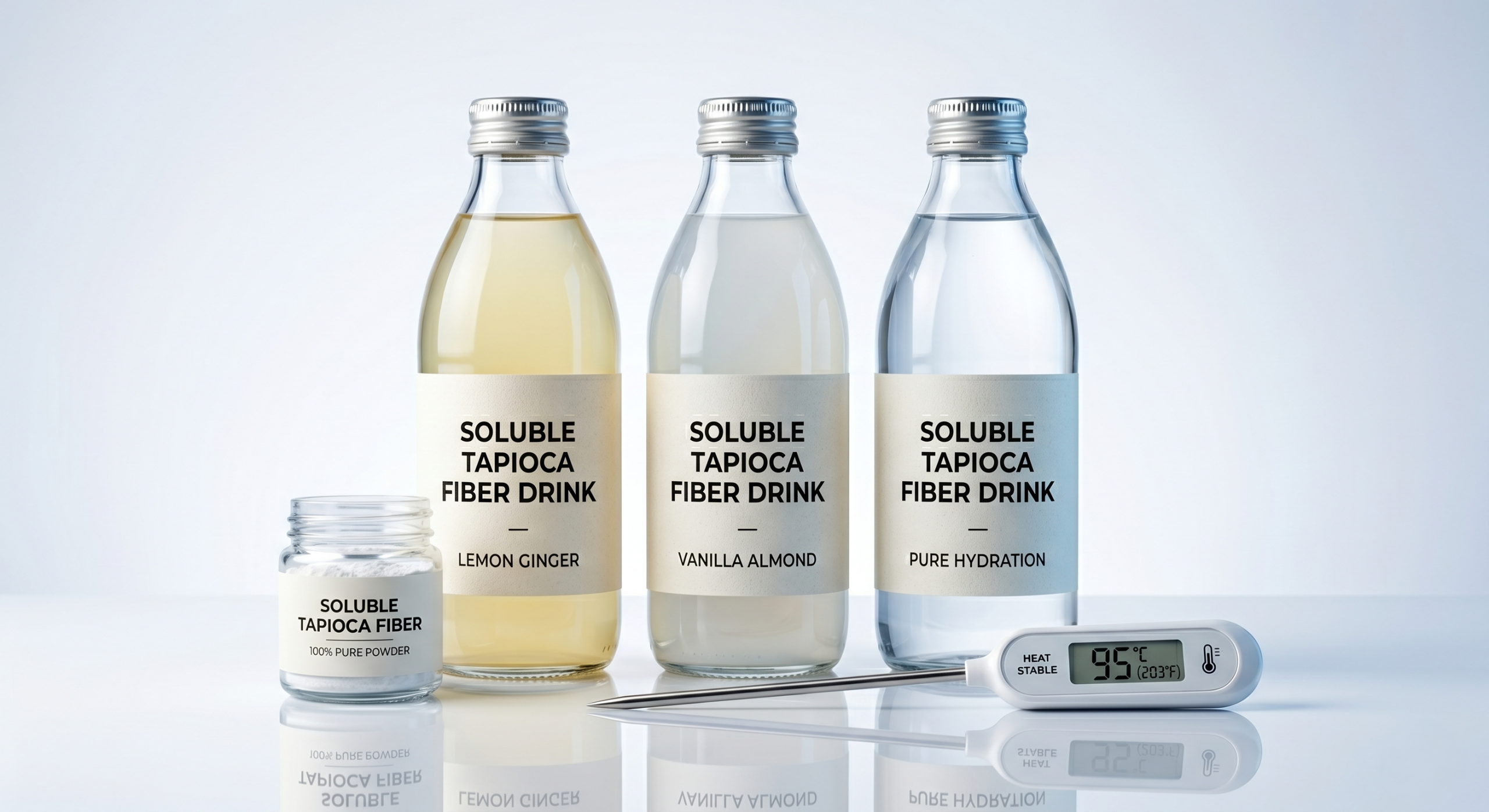
In RTD beverage production, soluble tapioca fiber maintains near-perfect optical clarity, adds minimal viscosity, and withstands high-heat processing (such as UHT or pasteurization). Its stable chemical bonds prevent the ingredient from breaking down into simple sugars over time, keeping your nutritional label accurate throughout its shelf life.
In clear functional beverages like sports drinks or vitamin waters, optical clarity is essential for consumer acceptance. Traditional fiber sources, including oat or flax fibers, contain insoluble fractions that cause instant turbidity (cloudiness) and visible sedimentation at the bottom of the bottle.
[Insoluble Fibers] ──────> Light Scattering ──────> Turbid / Cloudy Liquid
[Soluble Tapioca Fiber] ──> Full Dissolution ─────> Complete Optical Clarity

Soluble tapioca fiber dissolves completely in water at room temperature. Because it forms a true molecular solution rather than a suspension, it does not scatter light.
Turbidity Performance: It maintains low turbidity across extended storage periods.
Sediment Control: The fully dissolved fiber chains prevent phase separation, ensuring that clear or lightly tinted beverages remain free from grit or floating particles from the factory floor to the consumer’s pantry.
A common bottleneck when adding fiber to liquids is an unwanted increase in viscosity. Gums (like xanthan or guar) and certain chicory root inulins can thicken liquids dramatically, turning a refreshing beverage into an unappealing, syrupy gel.
For RTD applications, a fiber must deliver nutritional value without altering the drink’s base hydration mechanics.
Low Rheological Impact: Soluble tapioca fiber features a highly branched carbohydrate structure that keeps its viscosity low, even at high concentrations.
Mouthfeel Preservation: You can formulate at high solid levels—easily hitting 3 to 6 grams of fiber per serving—while keeping the liquid thin and easy to drink. It provides a smooth mouthfeel that mimics the body of sugar syrups without adding the associated calories or glycemic load.
RTD beverages must undergo thermal processing to achieve microbial safety and shelf stability. Whether your production line utilizes flash pasteurization, hot-fill techniques, or Ultra-High Temperature (UHT) processing, your functional ingredients must withstand intense thermal stress.
[Raw Beverage Mix] ──> [UHT Zone: 135°C–140°C] ──> [No Acid Hydrolysis] ──> [Stable Fiber Metrics]
Many common dietary fibers break down during heat treatment, especially in acidic environments like fruit juices or functional energy drinks. This process, known as acid hydrolysis, splits complex fiber chains into simple, monomeric sugars like glucose or fructose. This breakdown causes two major issues: it lowers the total fiber count on your nutritional label and inflates the product’s sugar content, violating regulatory compliance.
Soluble tapioca fiber features heat-resistant chemical bonds that withstand intense processing profiles:
UHT Resilience: It remains stable during typical UHT windows (135°C to 140°C for 2 to 5 seconds).
Acid Resistance: It resists breakdown in low-pH formulations down to 3.0, ensuring that your front-of-pack fiber claims stay accurate over a long retail shelf life.
| Physical Attribute | Soluble Tapioca Fiber Performance | Technical Benefit for Beverage Formulators |
| Optical Clarity | High light transmission; zero sediment. | Perfect for clear functional waters, teas, and juices. |
| Viscosity Matrix | Minimal thickening at high solids. | Preserves a refreshing, clean mouthfeel without turning syrupy. |
| Thermal Range | Stable under UHT and pasteurization. | Prevents ingredient breakdown during high-heat processing. |
| pH Compatibility | Resists hydrolysis down to pH 3.0. | Eliminates sugar inflation in acidic or carbonated drinks. |
Developing a top-selling RTD beverage requires consistent, high-performance ingredients. Blue Highcrest supplies premium, non-GMO soluble tapioca fiber engineered specifically to handle the physical demands of high-speed beverage production lines.
Our soluble fiber provides a clean, neutral flavor profile with a gentle, balanced sweetness that seamlessly carries flavors without adding off-notes or a metallic aftertaste. This allows you to reduce your reliance on synthetic masking agents and keep your ingredient list clean and short. From clear wellness waters to heavy plant-based protein blends, Blue Highcrest ensures your beverages remain physically stable, nutritionally dense, and highly compliant with global market standards.
Stop letting texture compromises and thermal breakdown delay your product launches. Contact the beverage engineering experts at Blue Highcrest today to access our complete technical data sheets, stability profiles, and to secure a dedicated production sample of our premium Soluble Fiber.
[Contact Blue Highcrest for a Beverage Ingredient Sample]
Unlike traditional inulin, which easily breaks down into simple sugars under acidic conditions, soluble tapioca fiber features stable chemical bonds. It maintains its structural integrity and total fiber count in low-pH beverages (down to pH 3.0) throughout processing and storage.
No. Soluble tapioca fiber dissolves completely into a clear molecular solution. It does not cause light scattering or turbidity, allowing your formulation to remain perfectly transparent and free from floating particles or bottom sediment.
Absolutely. Plant-based proteins often introduce a chalky or gritty texture to beverages. Soluble tapioca fiber acts as an excellent texturizer, improving mouthfeel, adding body, and smoothing out the overall beverage matrix without increasing viscosity.
Our soluble tapioca fiber delivers a high concentration of dietary fiber with a minimal glycemic impact. It provides roughly 1 to 2 kilocalories per gram, making it an excellent tool for brands looking to reduce sugar and calories while boosting digestive health claims.