
Creating a low-sugar or keto-friendly ice cream is one of the hardest tasks for a food scientist. When you remove traditional sugar from a frozen dessert, the entire structure collapses. Without sugar, ice cream freezes into a solid, rock-hard block of ice that is impossible to scoop. It also becomes gritty, icy, and loses its creamy, whipped texture.
To solve this problem, food makers must add a functional bulking agent that replaces the physical weight and chemical properties of sugar. By using soluble tapioca fiber, commercial ice cream factories can create low-sugar pints that stay perfectly soft, scoopable, and creamy, while easily supporting front-of-package health claims.
Direct Answer: Soluble tapioca fiber is a high-performance bulking agent used in low-sugar ice cream. It successfully controls the freezing point so the dessert remains soft and scoopable at freezer temperatures. Additionally, it binds free water to prevent crunchy ice crystals and thickens the base mix to hold air (overrun), ensuring a light, creamy texture.
In regular ice cream, sugar does not just provide sweetness; it acts as a freezing point depressant. This means it lowers the temperature at which water turns into solid ice. Because freezers are kept around -18°C, the sugar ensures that some of the water in the ice cream stays in a thick, liquid state. This unfrozen water is what makes traditional ice cream soft enough to scoop.
When you take sugar out, the water freezes completely, turning your dessert into a solid brick. Soluble tapioca fiber fixes this by perfectly mimicking sugar’s freezing point control. It dissolves completely into the milk or water base, keeping a portion of the water from freezing solid. This allows your low-sugar or vegan ice cream to remain soft and easy to scoop right out of the freezer, providing a premium experience for the customer.
Another major problem with frozen desserts is “heat shock.” This happens when ice cream melts slightly on the ride home from the grocery store and then freezes again in the customer’s freezer. During this melting and refreezing, water molecules join together to form large, crunchy ice crystals. This ruins the smooth texture, making the ice cream feel sandy and cheap.
Soluble tapioca fiber acts like a sponge. It loves water and binds it tightly within its structure. Because the water is trapped by the fiber, it cannot freely move around to form large, jagged ice crystals. This keeps the texture incredibly smooth over a long shelf life. We use this exact same moisture-locking science when using soluble tapioca fiber to cut sugar by 30% in baked goods, where it keeps cookies soft instead of crumbly.
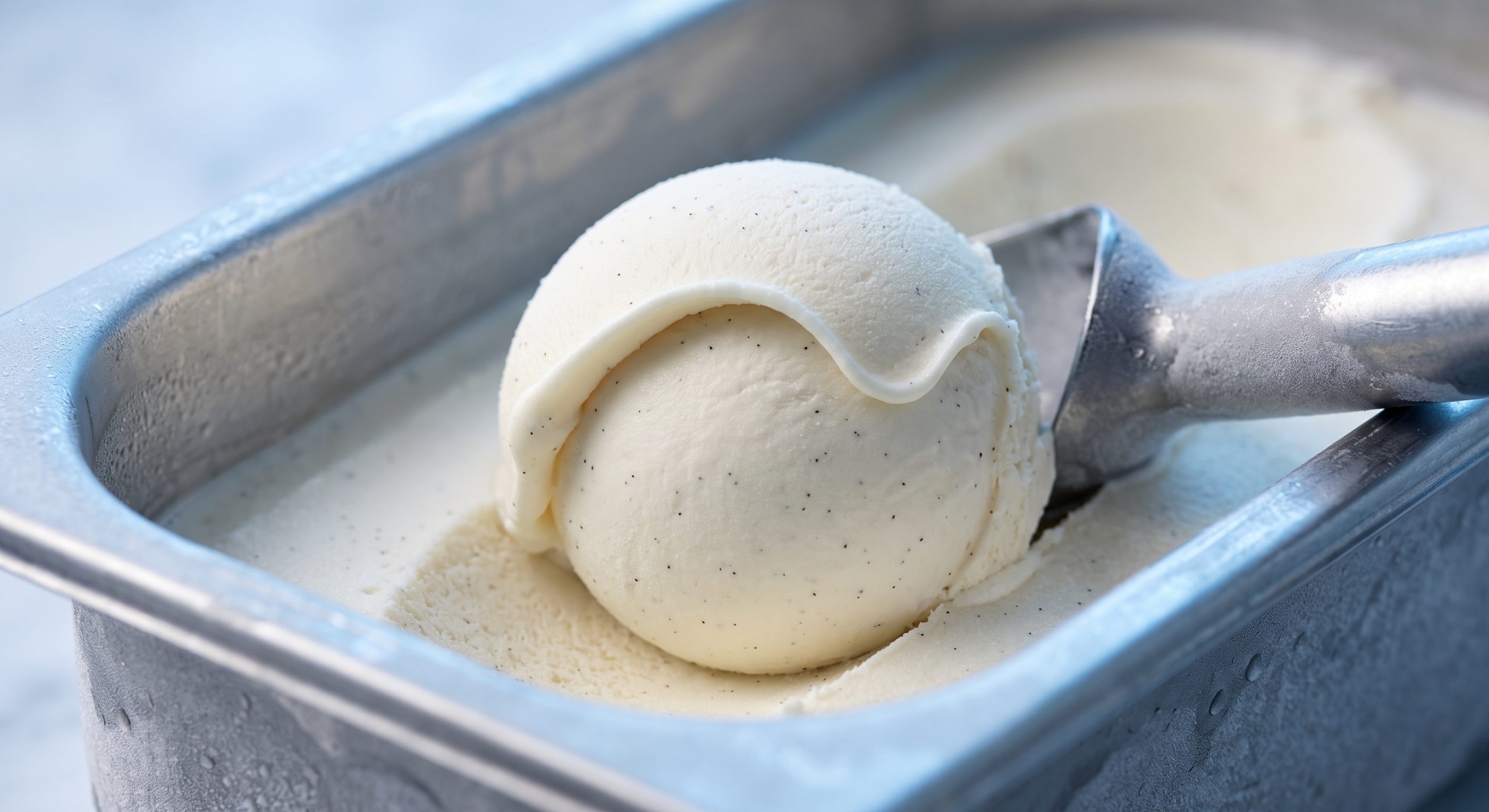
A great ice cream is not just frozen liquid; it is a foam. During manufacturing, giant blades whip air into the freezing mixture. This trapped air is called “overrun.” If an ice cream has 50% overrun, it means the volume has expanded by 50% due to whipped air. Overrun is what makes ice cream feel light, fluffy, and warm on the tongue instead of cold and dense.
To hold those air bubbles in place, the ice cream base must be thick and sticky before it is frozen. When you remove sugar, the base becomes too thin and watery, and the air simply escapes. Soluble tapioca fiber provides the perfect thickness (viscosity) to the liquid base. It stabilizes the mix, allowing the factory machines to whip in the perfect amount of air and keep it locked inside the frozen dessert.
To understand why soluble tapioca fiber is the preferred choice for premium brands, we must look at how it performs against other common sugar replacements like inulin and sugar alcohols.
| Feature | Soluble Tapioca Fiber | Inulin (Chicory Root) | Erythritol (Sugar Alcohol) |
| Scoopability | Excellent; keeps ice cream soft at -18°C | Good, but can become slightly icy | Poor; freezes into a very hard, solid block |
| Ice Crystal Control | High moisture binding stops large crystals | Moderate moisture binding | Low; crystallizes easily causing a sandy texture |
| Digestive Comfort | Very gentle; slow fermentation prevents gas | Poor; ferments rapidly causing severe bloating | Moderate; can cause cooling aftertastes and laxative effects |
| Overrun (Air Holding) | Greatly improves thickness to hold air bubbles | Adds some thickness | Does not thicken the base; air escapes easily |
To dive deeper into how these fibers compare on a molecular level, review our soluble tapioca fiber vs inulin formulation guide.
Many “diet” ice creams rely heavily on sugar alcohols like erythritol or cheap fibers like inulin to replace sugar. While these ingredients lower the calorie count, they are famous for causing severe stomach pain, gas, and bloating. If your ice cream makes customers feel sick, they will never buy it again.
Soluble tapioca fiber is incredibly gentle on the stomach. It passes safely through the upper digestive system and ferments very slowly in the lower gut. This means you can add enough fiber to make the ice cream scoopable without worrying about upsetting your customer’s stomach. This gentle digestion allows brands to easily enter the gut health market without a product overhaul, placing “Prebiotic Fiber” and “Gut Friendly” claims directly on the pint. This powerful binding and digestive benefit is the same reason it is highly favored for improving soluble tapioca fiber protein bars.
Making the perfect low-sugar ice cream requires a reliable, highly purified bulking agent. Blue Highcrest provides premium, commercial-grade soluble tapioca fiber designed perfectly for large-scale frozen dessert manufacturing.
Our soluble tapioca fiber delivers:
Perfect Scoopability: Matches the freezing point control of sugar for soft, premium ice cream.
Clean Label Purity: Non-GMO, allergen-free, and leaves absolutely no bitter aftertaste.
High Fiber Content: Easily boosts your nutritional panel to support strong health claims.
Ready to fix the texture and scoopability of your low-sugar frozen desserts? Contact the technical sales team at Blue Highcrest to request a commercial liquid syrup or dry powder sample, complete Certificates of Analysis (COA), and wholesale pricing.
Both forms work beautifully. If your factory uses a liquid mixing system for the ice cream base (like a standard dairy vat), the liquid syrup is very easy to pump and mix. If you are selling a dry ice cream mix in a bag for soft-serve machines, the dry powder is the required choice.
No. Soluble tapioca fiber is only about 15% to 20% as sweet as regular sugar. It provides the physical bulk and texture you need, allowing you to control the exact sweetness level by adding small amounts of natural sweeteners like stevia or monk fruit.
Yes. Dairy-free milks (like almond or oat milk) have much higher water content and lower fat than cow’s milk, making them very prone to iciness. Adding soluble tapioca fiber binds that extra water, making vegan ice cream taste just as rich, dense, and creamy as premium dairy ice cream.
It is extremely stable under high heat. You can add soluble tapioca fiber directly to your ice cream base before it goes through the high-temperature pasteurization step. It will not burn, break down, or lose its nutritional fiber content during heating.