
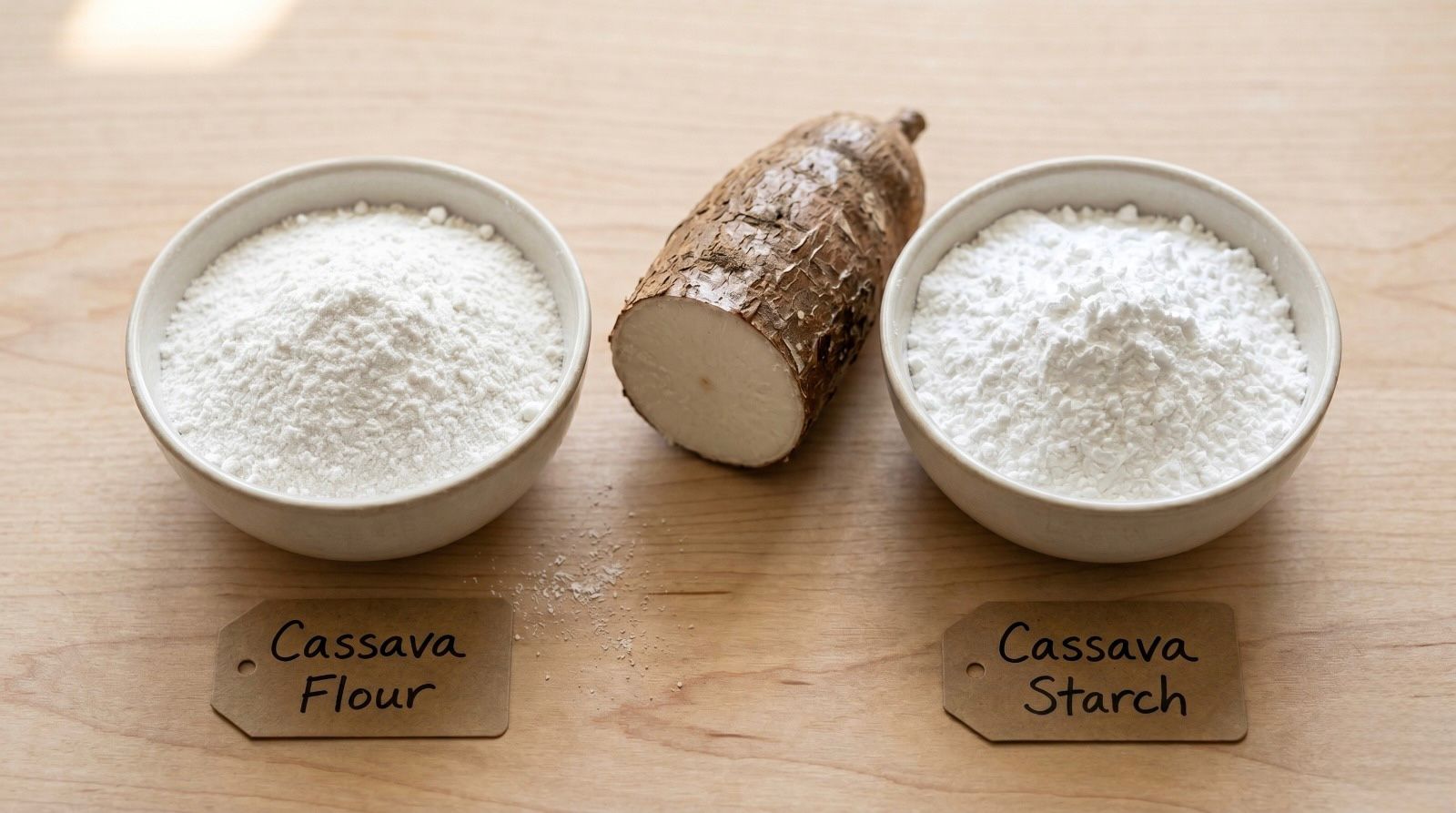
Marketing departments often use the terms “Cassava Flour” and “Tapioca Starch” interchangeably. However, this linguistic overlap is a significant hurdle for food technologists and procurement leads. Choosing the wrong derivative can lead to disastrous results on the production line. These risks range from brittle textures in gluten-free crackers to viscosity failures in industrial sauces. Therefore, understanding the structural divergence of these two ingredients is critical for product success.
The fundamental difference lies in the degree of processing. Specifically, it involves the resulting nutritional profile. Cassava flour is the “whole food” option. To produce it, the entire root is peeled, dried, and ground into a fine powder. This process successfully retains the fiber, minerals, and complex carbohydrates inherent to the tuber.
In contrast, Tapioca starch is the result of a washing and pulping process. This method extracts only the pure starch milk. Once the water evaporates, a carbohydrate-dense powder remains. Consequently, this powder is devoid of fiber and protein. For R&D teams, this distinction is about more than just the “nutrition facts” panel. The fiber in cassava flour acts as a structural stabilizer. Meanwhile, the amylose content in tapioca starch governs gelatinization.
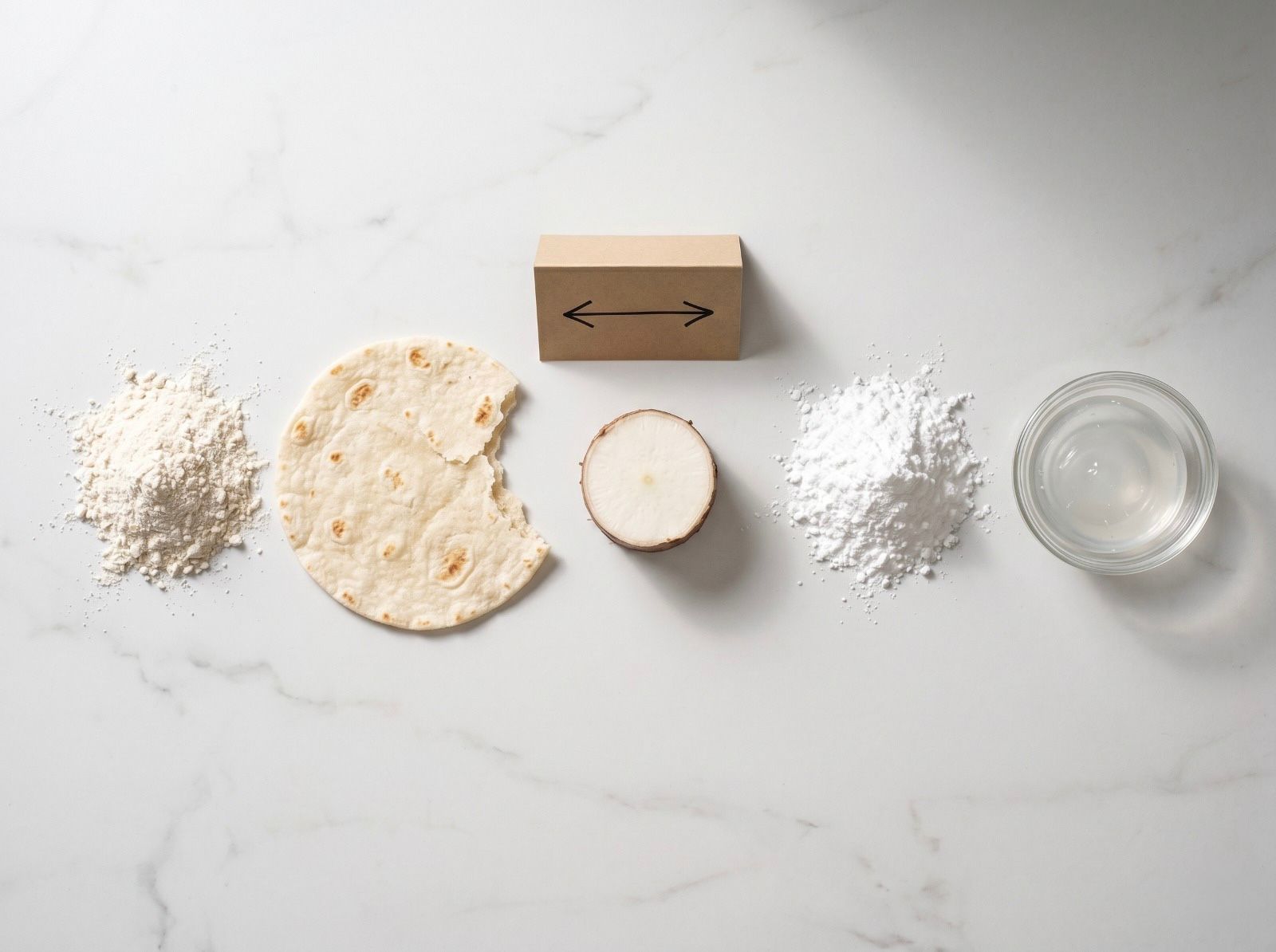
When formulating at scale, the decision centers on how the ingredient reacts to moisture. Recent industry data suggests that manufacturers are increasingly looking for “native” starches. They want to replace modified ones to meet clean-label demands.
Tapioca Starch: This ingredient is known for its high “expansion” power. Therefore, it is the gold standard for achieving a light texture in extruded snacks. In liquid applications, it creates a translucent, glossy finish. Furthermore, it is freeze-thaw stable. This makes it vital for frozen entrees.
Cassava Flour: This flour provides a “nutty” flavor profile and a denser mouthfeel. Because it contains fiber, it acts as a traditional wheat flour replacement. Specifically, it works at a 1:1 ratio in many recipes. Consequently, it is the preferred choice for grain-free tortillas and cookies where structural integrity is paramount.
Market analysis shows a 12% annual increase in cassava flour use within the “Premium Health” sector. Procurement officers notice that consumers now look for “Paleo” and “Grain-Free” labels. While tapioca starch is gluten-free, some view it as a refined carbohydrate. On the other hand, cassava flour is a whole-root ingredient. This allows brands to claim a “less processed” status. As a result, companies can justify a higher price point.
However, this trend introduces a procurement risk regarding consistency. Cassava flour includes more raw plant matter. Therefore, seasonal variations in the crop can affect the flour’s behavior. This is why technical vetting of your supplier is vital.
From a purchasing perspective, the challenge is ensuring consistent quality. At Blue Highcrest, we specialize in building bridges between Southeast Asian farmers and global manufacturers. We understand that a Procurement Director isn’t just buying powder. Instead, they are buying a guarantee of performance.
Our supply chain is built on a foundation of rigorous laboratory testing. We monitor peak viscosity, moisture content, and microbial counts. Consequently, our partners receive ingredients that perform exactly as intended. This remains true whether they use starch as a binder or flour as a base.
One often-overlooked detail is how these ingredients handle water activity over time. Cassava flour’s fiber content holds onto moisture differently than pure starch. This may extend the softness of a baked good. However, it could also introduce challenges in shelf-stability. Blue Highcrest’s technical consultants work directly with R&D teams to analyze these interactions. Our goal is to ensure the final product maintains its quality from the warehouse to the pantry.
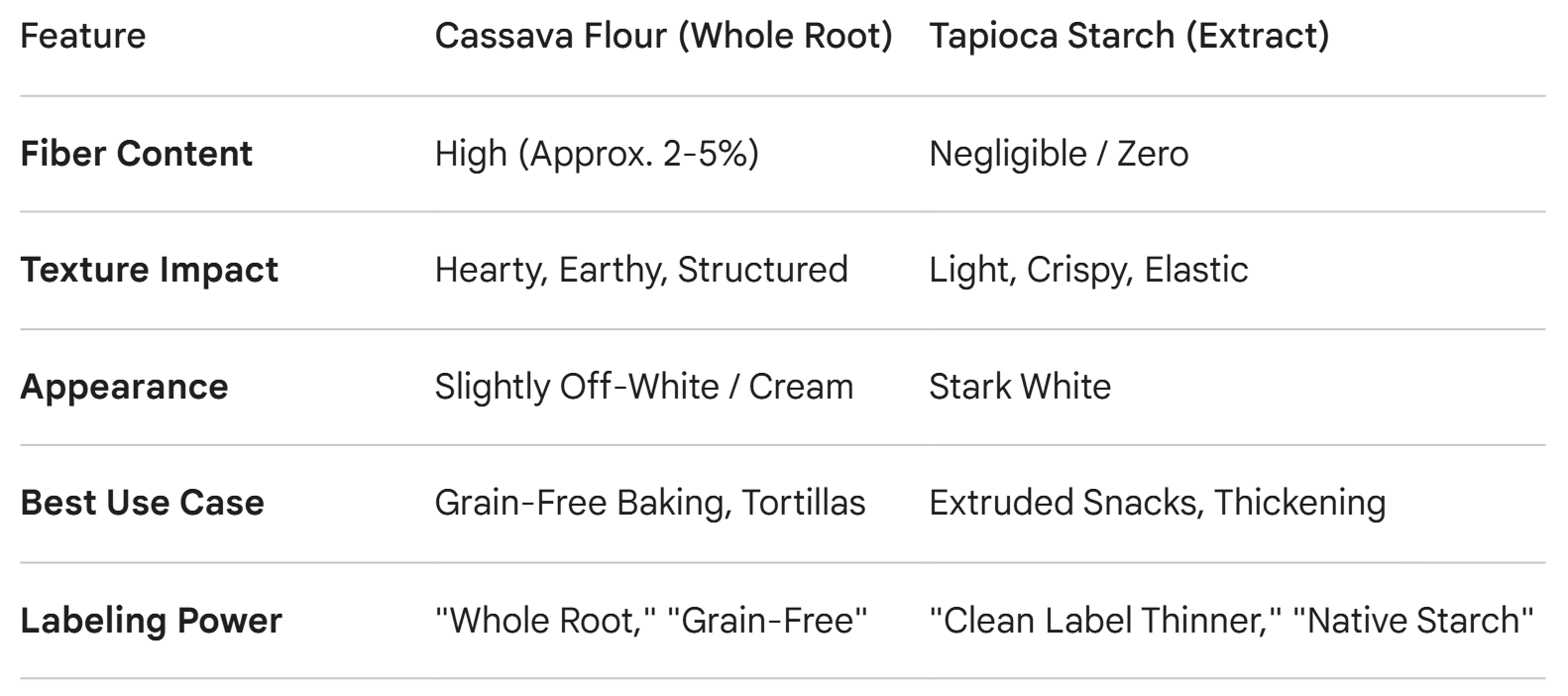
Choosing between cassava flour and tapioca starch is a strategic decision that affects everything from your “Clean Label” claims to your bottom-line manufacturing costs. As the market for functional, plant-based foods matures, the ability to pivot between these two ingredients or utilize a custom blend will be a key competitive advantage for food brands.
Procurement and R&D must move in lockstep, ensuring that the functional requirements of the food scientist are met by the logistical reliability provided by the purchasing team.
If your team is currently navigating a reformulation or developing a new product line in the gluten-free space, Blue Highcrest offers the technical expertise and global reach to support your goals. We don’t just ship ingredients; we provide the data, the reliability, and the industry insight required to stay ahead of the competition.
Ready to optimize your formulation? Contact Blue Highcrest today for technical data sheets, COAs, and sample requests. Let our specialists help you determine the perfect cassava derivative for your specific application.