
In the high-stakes world of commercial gluten-free (GF) R&D, the difference between a market-leading product and a formulation failure often rests on a single metric: the water absorption ratio. For food technologists, transitioning from wheat-based systems to cassava-based formulations requires a fundamental shift in rheological expectations.
Cassava flour is not a “drop-in” replacement for wheat; it is a complex carbohydrate matrix that interacts with moisture in distinct, high-performance ways. Understanding these technical specifications is critical for achieving the desired crumb structure, shelf-life stability, and dough handling properties.
Direct Answer: What is the Water Absorption Ratio of Cassava Flour? The standard water absorption ratio for premium cassava flour typically ranges between 150% and 200% (1:1.5 to 1:2). This variance depends on starch damage, particle size, and amylose content. Optimal hydration occurs when the flour effectively encapsulates moisture to provide structural integrity without residual gumminess in GF applications.
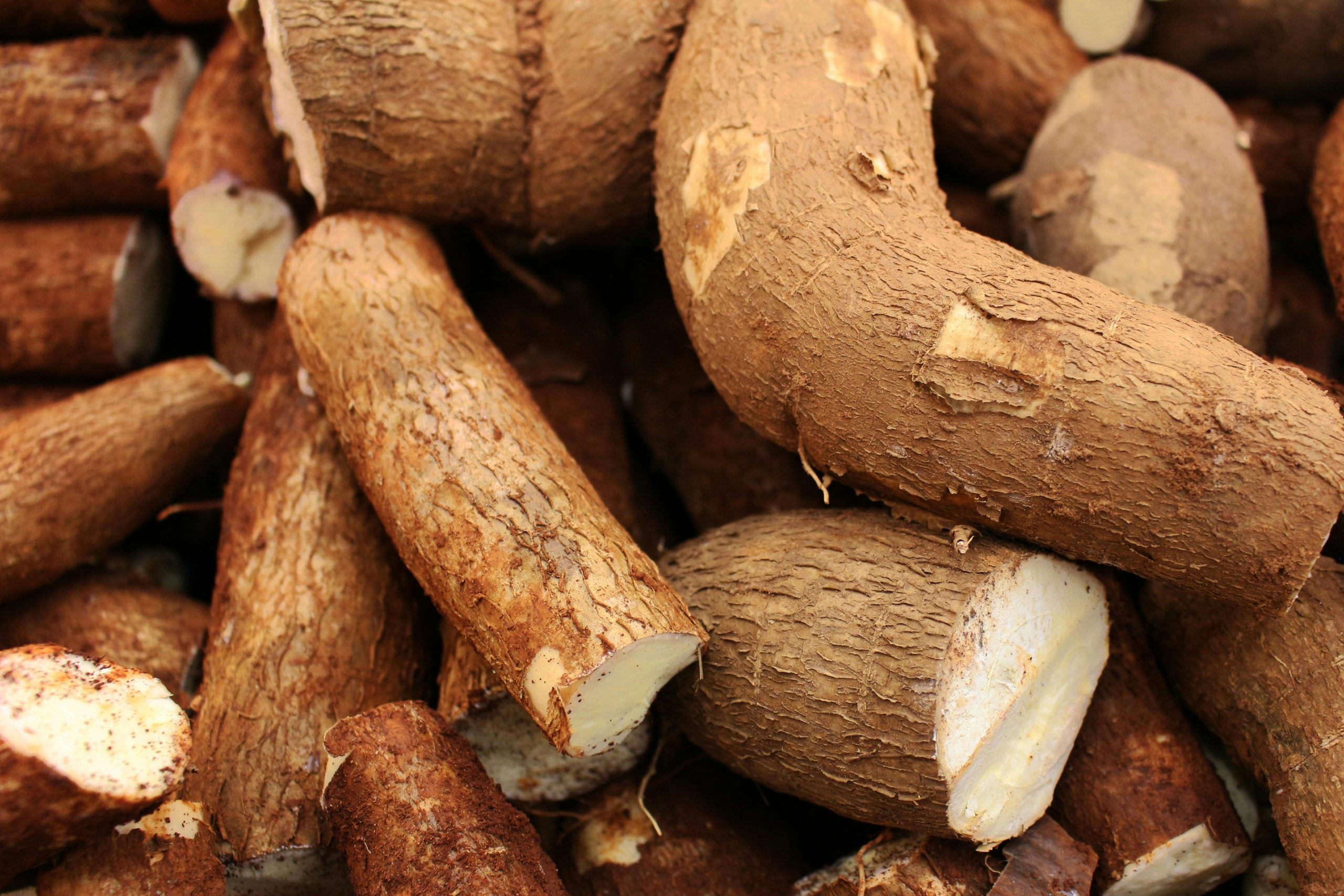
Unlike wheat, which relies on a gluten protein network for structure, cassava flour relies on starch gelatinization and its unique fiber-to-starch ratio. When evaluating a cassava flour spec sheet, the Water Absorption Capacity (WAC) indicates the flour’s ability to hold water against gravity and processing pressure.
Particle Size (Granulometry): Finer mesh sizes (typically 80-100 mesh) increase the surface area, leading to faster hydration but potentially higher peak viscosity.
Starch Damage: During the milling process, physical damage to starch granules can increase water uptake. High-quality milling, such as that utilized by Amerta Pacific, ensures controlled starch damage for predictable R&D outcomes.
Amylose vs. Amylopectin Ratio: The ratio of these two glucose polymers dictates how the flour retrogrades (stiffens) after cooling. Higher amylose content generally leads to better structural stability in bread.
Food technologists must balance the liquid-to-solids ratio to prevent overly dense or batter-like doughs. Cassava flour offers distinct structural benefits compared to other common gluten-free starches and flours.
| Flour / Starch Type | Typical Water Absorption Ratio | Rheological & Textural Impact |
| Premium Cassava Flour | 150% – 200% | Flexible crumb structure, high elasticity, superior moisture retention. |
| White Rice Flour | 100% – 130% | Sandier texture; prone to moisture migration and syneresis. |
| Potato Starch | 200%+ | Rapid gelation; risk of high viscosity and gummy interior. |
| Whole Wheat Flour | 60% – 75% | Reliant on gluten matrix development rather than starch swelling. |
Leveraging the higher hydration capacity of cassava allows development teams to increase batch yields while preserving a soft mouthfeel across shelf life.
The ideal water-to-flour ratio shifts based on the target application and processing parameters. We recommend using the following baseline parameters during initial bench-top testing:
Target Ratio: 1:1.7 to 1:1.8
Technical Focus: High hydration mimics the structural spring of gluten. However, excessive free water can cause post-bake collapse. Maintaining raw flour moisture below 12% ensures consistent hydration calculations.
Target Ratio: 1:1.1 to 1:1.3
Technical Focus: Lipids compete with starches for available water. Controlled hydration prevents dough from becoming overly slack while keeping the final product crispy rather than tough.
Target Ratio: 30% – 35% total dough moisture
Technical Focus: Uniform moisture distribution is crucial prior to extrusion. Cassava’s low gelatinization temperature helps create a cohesive matrix under heat and pressure.
Batch-to-batch variance in raw materials leads to extended calibration cycles on production lines. Sourcing high-purity cassava flour with standardized particle size and moisture profiles is essential to maintaining stable dough rheology.
Blue Highcrest supplies premium, commercial-grade cassava flour engineered specifically for wholesale manufacturers and food developers. Key advantages include:
Standardized Granulometry: Uniform mesh profiles for predictable hydration speed.
Low Moisture Volatility: Consistent baseline moisture content to prevent batch-weight drift.
Clean Flavor Profile: Neutral taste profile that eliminates earthy off-notes in delicate baked goods.
To optimize water binding during preliminary trial runs:
Stage 1: Add 80% of total calculated formula water during initial low-speed mixing.
Rest Period: Allow a 3-minute rest phase to let starch granules hydrate without mechanical degradation.
Stage 2: Add the remaining 20% water while monitoring dough torque and viscosity.
This protocol ensures full water absorption before setting final dough handling parameters.
Transitioning gluten-free formulations from concept to commercial scale requires reliable raw materials backed by technical performance. Blue Highcrest delivers premium cassava flour designed to meet exact manufacturing standards.
Ready to validate cassava flour in your next development sprint? Visit Blue Highcrest to request a commercial sample kit along with complete specifications and Certificates of Analysis (COA).
Water temperatures above 60°C trigger partial gelatinization, causing a rapid increase in viscosity and water uptake. For standard dough handling, ambient or cold water is recommended.
While cassava flour provides excellent water binding and crumb flexibility, a low dosage of hydrocolloids (0.5–1.0%) is still recommended in leavened breads to optimize gas retention during proofing.
An 80 to 100 mesh size is standard for gluten-free baking applications, balancing rapid hydration with smooth dough texture.
Always account for the native moisture content listed on the supplier COA. Adjust total added water in your formula to maintain a constant dry-solids-to-water ratio.