
The European plant-based market is currently undergoing a massive structural shift. Previously, formulation focused simply on “being vegan.” Today, the focus has moved toward nutritional density and clean-label purity. For procurement directors and R&D teams, sourcing a reliable pea protein isolate bulk supplier is no longer just a price-per-ton negotiation. Instead, it is a hunt for technical compatibility. Specifically, buyers are looking for proteins that can withstand industrial processing without ruining the organoleptic profile of the final product.
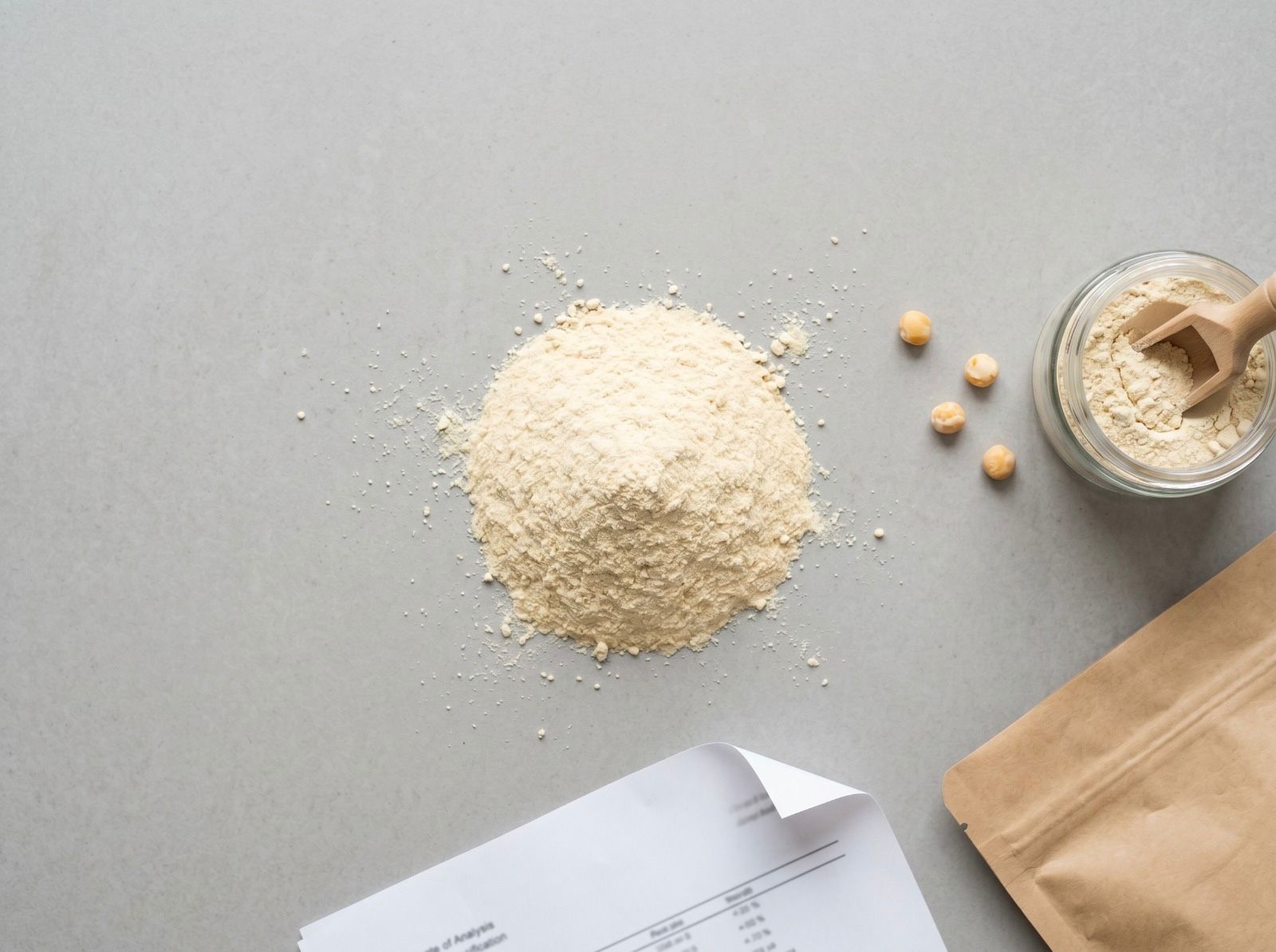
Historically, soy was the primary choice for meat analogs and dairy alternatives. However, rising allergen concerns and GMO stigmas have forced a transition. Consequently, pea protein isolate has emerged as the clear winner for European manufacturers. According to recent industry data, the demand for non-GMO pea protein in the EU is projected to grow by 11% annually through 2028.
This growth is driven by the European consumer’s demand for “transparency.” Furthermore, the sustainability profile of peas which require significantly less water than soy aligns perfectly with EU Green Deal objectives. For a Director of Procurement, this means that sourcing decisions now directly impact the brand’s ESG (Environmental, Social, and Governance) rating.
When evaluating a bulk supplier, R&D teams must look past the “90% Protein” label. Specifically, they need to analyze the functional behavior of the isolate within their specific food matrix.
Protein Purity: While many suppliers claim high purity, the extraction method matters. Specifically, mechanical extraction without harsh solvents preserves the protein’s native structure.
Amino Acid Profile: Pea protein isolate is valued for its high lysine content. However, to achieve a complete PDCAAS (Protein Digestibility Corrected Amino Acid Score) of 1.0, it is often blended with rice protein.
Solubility and Texture: In liquid applications, such as high-protein milks, solubility is the biggest hurdle. A low-quality isolate will “fall out” of suspension, creating a gritty mouthfeel. Therefore, testing the particle size and ionic strength is vital.

Pea protein isolate is not a novel food under EU regulations — peas have a long and established history of consumption in Europe. Pulses including peas are among the alternative proteins with the clearest regulatory access to EU markets. However, that doesn’t mean the documentation burden is light. It means the documentation is well-defined, and any serious supplier should be able to produce it without delay.
Here is what your procurement checklist should include before approving any pea protein isolate supplier for EU or UK manufacturing:
Certificate of Analysis (COA) per batch — protein content, moisture, ash, heavy metals (lead, cadmium, arsenic, mercury), microbial counts, and particle size. Not a generic product COA — a lot-specific one you can trace to the production batch you receive.
Non-GMO verification — particularly important given that pea protein’s competitive edge over soy is partly built on its non-GMO positioning. If your finished product carries a non-GMO claim, your ingredient documentation needs to support it.
Halal and/or Kosher certification — depending on your export markets and distribution channels, particularly relevant for Middle East export or retailers with specific certification requirements.
MSDS (Material Safety Data Sheet) — required for internal chemical handling compliance, regardless of how benign the ingredient is.
Phytosanitary certificate — mandatory for plant-derived ingredients entering the EU from third countries. Missing this document is one of the most common reasons shipments are held at customs.
Allergen declaration — pea is not one of the 14 mandatory allergens listed in EU regulation 1169/2011, but cross-contamination with listed allergens (particularly soy and gluten) must be declared if relevant. Your supplier needs to confirm their manufacturing environment.
Suppliers who can produce this documentation immediately, without chasing, are operationally ready to be part of your supply chain. Those who take weeks to compile a basic COA are telling you something important about what happens when you have a quality query mid-production.
One of the primary complaints about pea-based products is the residual earthy or “beany” flavor. This aftertaste is caused by lipoxygenase enzymes. Traditionally, manufacturers used expensive masking agents to hide this flavor. However, modern procurement strategies focus on sourcing “neutral-profile” isolates at the start.
At Blue Highcrest, we specialize in sourcing isolates that undergo advanced deodorization processes. This ensures a clean finish. Consequently, R&D teams can reduce their reliance on artificial flavors. This shift doesn’t just improve the taste; it also cleans up the ingredient label. As a result, the product becomes more attractive to the health-conscious European consumer.
For a B2B buyer, the most expensive ingredient is the one that doesn’t arrive. Global supply chains have faced unprecedented volatility recently. Therefore, Blue Highcrest has built a resilient logistics network. We focus on bridging the gap between high-yield production zones and European manufacturing hubs like the Netherlands, Germany, and France.
We manage the complexities of EU customs and food safety certifications (such as IFS and BRC). Instead of managing multiple vendors, our partners rely on us as a single point of technical and logistical truth. This reduces the administrative burden on your purchasing department. Furthermore, it ensures that every batch meets the exact specifications requested by your R&D lab.
Many European startups and established brands are moving toward “Hybrid” products. These products blend plant-based proteins with traditional ingredients to lower costs and improve health profiles. Blue Highcrest supports this innovation through our white-label and bulk supply services. We don’t just provide the isolate; we provide the formulation data required to scale these products efficiently.
The Plant-Based sector is moving into a “Second Generation.” In this phase, taste and label transparency are the only ways to win market share. Therefore, procurement and R&D must work as a unified team. They must select ingredients that solve formulation problems before they reach the factory floor.
Selecting the right pea protein isolate bulk supplier is a long-term investment in your product’s reputation. By focusing on purity, neutral flavor, and supply chain reliability, European manufacturers can future-proof their brands against both regulatory changes and consumer shifts.
At Blue Highcrest, we provide the technical depth and logistical stability required for the modern European food market. Our specialists are ready to provide COAs, technical data sheets, and samples for your next pilot run.
Contact our European sourcing team today. Let’s discuss how we can optimize your plant-based formulation and secure your bulk protein supply.