
For private label buyers looking to capture market share in the booming functional food sector, timing is everything. Supermarket category managers are hungry for premium, clean-label alternatives to traditional chips and bars. The temptation to rush an innovative healthy snack from the development lab directly onto retail shelves is immense.
However, a massive commercial gulf exists between a culinary prototype and a launch-ready product. A prototype is a proof of concept crafted in small batches under ideal conditions. A launch-ready product is a commercially viable asset designed to withstand industrial manufacturing, prolonged transit, and strict retail audits. For a private label buyer, confusing the two can lead to catastrophic line failures, margin erosion, and lost retail contracts.
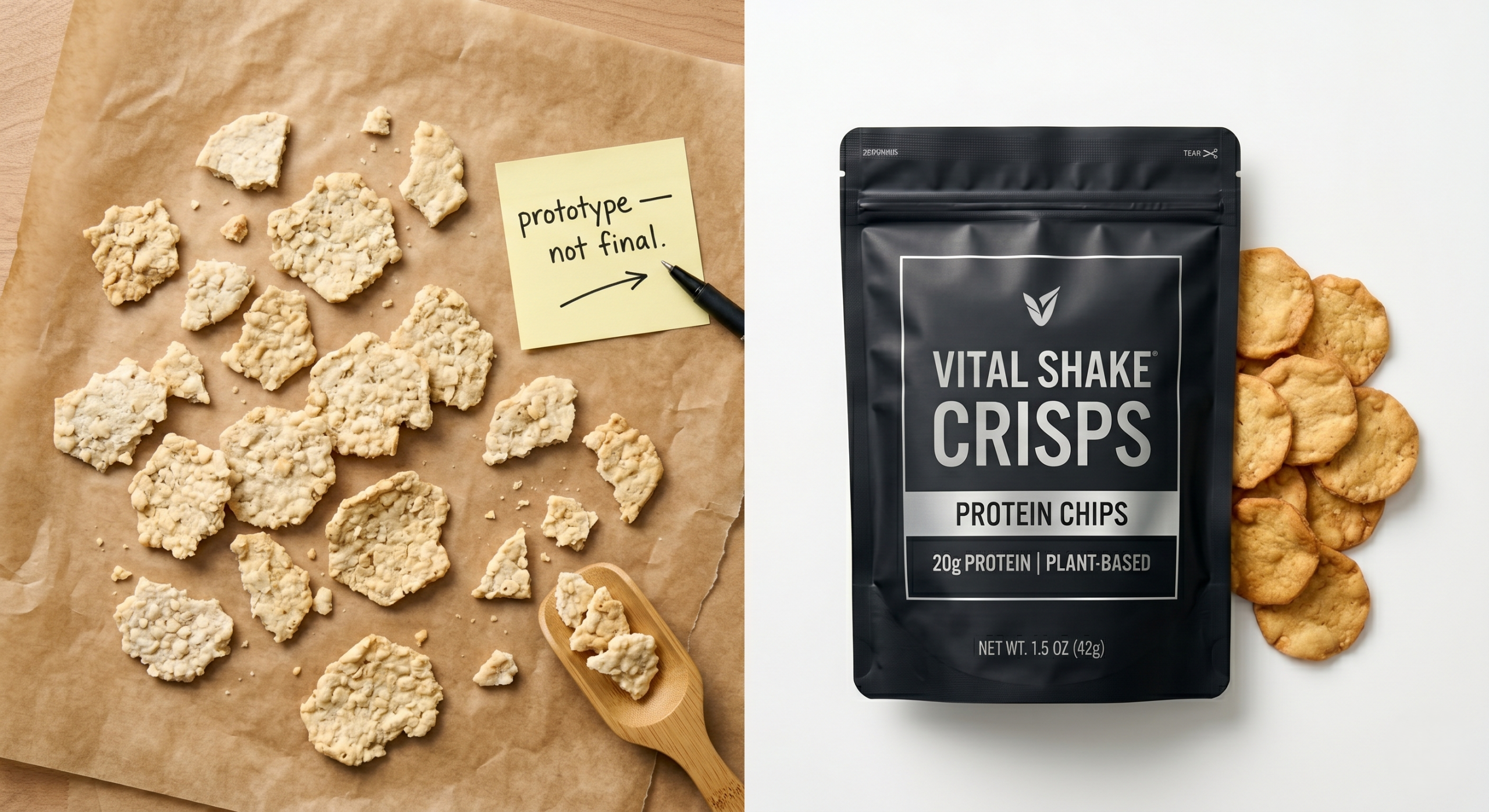
A launch-ready private label healthy snack balances consumer-grade taste with industrial scaling parameters: predictable shelf life, optimized water activity, zero chemical degradation, and automated packaging efficiency. Conversely, a prototype is a small-batch concept that often fails under commercial extrusion, high-heat processing, and global logistics stress.
In the competitive world of private label retail, your brand is only as reliable as your latest production run. Rushing an unrefined formulation into a commercial facility introduces unpredictable variables.
If a snack bar deforms on an automated packaging line, or if a clean-label puff loses its crunch after three weeks in a warehouse, the financial liability falls squarely on the brand owner. Retailers do not forgive out-of-stock notices or product recalls caused by poor structural stability. Private label buyers must recognize the operational indicators that prove a formulation is truly ready for commercial rollout.
To ensure your private label product portfolio is ready for high-volume retail, verify that your manufacturing partner has optimized these four core technical benchmarks:
A prototype mixed by hand in a test kitchen behaves completely differently than a 500-kilogram batch moving through an industrial extruder or sheeting line. Launch-ready healthy snacks are engineered to maintain a specific viscosity, texture, and elasticity under intense mechanical shear and thermal stress. If the dough is too sticky or too brittle, automated equipment jams, driving up waste and labor costs.
While prototypes are consumed immediately after preparation, commercial healthy snacks must remain shelf-stable for 9 to 18 months. Achieving this requires precise moisture management:
Water Activity Targets: Keeping below 0.65 to inhibit mold and bacterial growth without relying on synthetic chemical preservatives.
Humectancy Control: Utilizing functional plant-based ingredients to lock in essential moisture, preventing snacks from turning dry, chalky, or rock-hard over time.
A launch-ready formulation has undergone rigorous environmental stress testing. This includes exposing the product to elevated temperatures and humidity levels to simulate months of storage and transit. True commercial readiness means verifying that nutritional active ingredients, flavor compounds, and color integrity do not degrade over time.
The snack and the packaging material must function as a unified system. Launch-ready snacks are tested against specific gas flush parameters (such as nitrogen purging) to eliminate oxygen and prevent lipid oxidation or staleness. The oil and moisture levels of the snack must not compromise the heat seals of the film, ensuring a airtight barrier from the factory floor to the consumer’s pantry.
| Product Stage | Manufacturing Method | Shelf-Life Status | Regulatory & Compliance |
| Kitchen Prototype | Small-scale bench work; manual mixing and portioning. | Days to weeks; highly susceptible to oxidation and staling. | Unverified nutritional panels; preliminary ingredient declarations. |
| Launch-Ready Asset | Automated commercial lines; high-throughput extrusion/baking. | 9-18 months guaranteed via validated moisture control. | Certified non-GMO, allergen-tested, and fully compliant with FDA/EU laws. |
Navigating the complex transition from an experimental concept to a high-performing retail asset requires a manufacturing partner with deep technical expertise. Blue Highcrest specializes in developing and manufacturing premium, launch-ready private label healthy snacks that meet the exacting standards of international retail buyers.
We eliminate the guesswork from product development. Our state-of-the-art facilities, certified ingredient sourcing, and rigorous quality assurance protocols ensure that your custom formulations scale flawlessly on automated lines. By focusing on clean-label starch integration, optimized water activity, and premium functional nutrition, Blue Highcrest delivers healthy snacks that preserve their taste, texture, and structural integrity throughout the entire retail lifecycle.
Investing in private label healthy snacks is a lucrative growth strategy, but only if your products can survive the realities of mass production and global supply chains. Partnering with an expert who knows how to refine a raw prototype into a rugged, retail-ready asset protects your margins, secures your shelf space, and builds lasting consumer trust.
Don’t risk your brand’s reputation on unproven kitchen concepts. Contact the commercial formulation and private label development experts at Blue Highcrest today to review your product ideas, explore our launch-ready snack capabilities, and request custom samples engineered for mass-market success.
[Partner with Blue Highcrest for Commercial Private Label Success]
Clean-label prototypes often rely on whole food ingredients that naturally vary in moisture and binding capacity. Without synthetic stabilizers, these mixtures can clog high-speed industrial machinery or separate under thermal processing if they are not scientifically balanced by an experienced manufacturer.
Water activity measures the unbound water available for chemical reactions and microbial growth. If water activity is poorly managed, moisture migrates from the carbohydrate binder into the proteins, causing the snack bar to harden over time and lose its desirable chewy texture.
To secure placement in major EU and US retail chains, a launch-ready product should be manufactured in facilities certified under GFSI-recognized standards such as BRCGS or FSSC 22000, complemented by relevant product claims like Non-GMO Project Verified, Halal, or Gluten-Free.
Yes. Blue Highcrest’s technical R&D team works directly with private label buyers to analyze existing bench formulas, replace unstable components with high-performance natural alternatives, and optimize the recipe for seamless, high-volume commercial extrusion and packaging.