
For food scientists making granola and breakfast cereals, getting big, crunchy clusters is the main goal. Consumers love large clusters, but traditionally, factories use high amounts of honey, maple syrup, or corn syrup to glue the oats and nuts together. When brands try to cut out these sugars to make a healthier product, the granola often falls apart into loose, dusty oats.
By replacing traditional sugary syrups with soluble corn fiber, food makers can easily bind their granola into perfect clusters. This high-quality ingredient acts just like liquid sugar in the mixing bowl and oven, allowing factories to create a crunchy, low-sugar breakfast cereal that stays crispy in milk.
Direct Answer: Soluble corn fiber is the perfect clean-label binder for low-sugar granola and cereals. It provides the exact sticky syrup texture needed to glue oats and nuts into large clusters. When baked, it dries into a clear, hard glaze that delivers a loud crunch and keeps the cereal crispy in milk, all without adding actual sugar to the nutrition label.
In a standard granola factory, liquid sugars act as an edible glue. The liquid coats the dry oats, sticks them together on the baking sheet, and hardens as the water evaporates in the hot oven. If you remove the sugar and just use oil or water, there is no glue. The mixture will never form clusters.
Soluble corn fiber behaves exactly like traditional liquid sugar. It comes in a thick, sticky syrup that coats dry ingredients perfectly. Because its physical weight and stickiness are so close to standard corn syrup, you do not need to change your factory’s mixing equipment. This is the exact same binding power that helps keep soluble corn fiber in low-sugar gummies and chewables perfectly bouncy and stable.
Baking low-sugar products can be tricky. Some sugar alternatives burn very quickly at high temperatures, turning the granola dark brown and giving it a bitter, burnt taste before the oats are fully cooked.
Soluble corn fiber has a very low amount of “reducing sugars.” This means it can handle the high heat of a commercial baking oven without burning quickly. It allows your granola to slowly toast to a beautiful, light golden brown color. You get the perfect roasted oat flavor without worrying about ruined, burnt batches on your commercial baking lines.
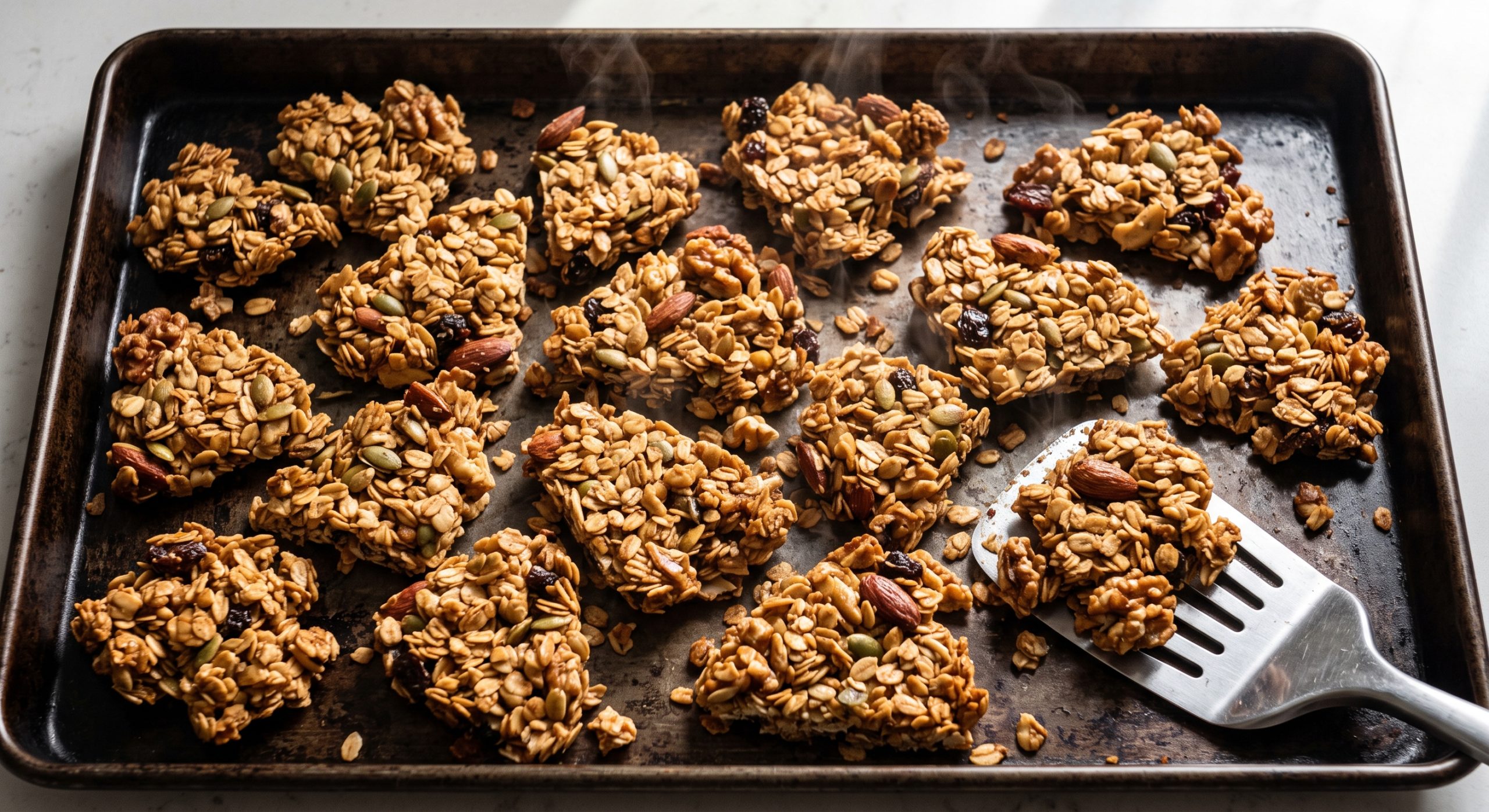
A great breakfast cereal must survive the “bowl test.” If the granola turns soggy and mushy exactly one minute after the consumer pours milk on it, they will not buy it again. Consumers expect their cereal to stay crunchy while they eat it.
Soluble corn fiber forms a strong, glassy shield around the oat clusters after baking. This hard shield acts as a waterproof barrier. When the cereal sits in a bowl of milk, the fiber barrier stops the milk from soaking into the oats too quickly. This keeps your cereal loud and crunchy for a much longer time. We see this same exact glassy, hard-snap benefit when using soluble corn fiber in keto chocolate to protect snap and gloss.
To understand why soluble corn fiber is the top choice for modern cereal brands, it helps to compare it directly to other common syrups used in factories. For a deeper look at different fiber bases, you can also read our guide on soluble corn fiber vs. soluble tapioca fiber in formulation.
| Binder Ingredient | Cluster Sticking Power | Bowl Life (Crunch in Milk) | Sugar Added to Label | Digestive Comfort |
| Soluble Corn Fiber | Excellent (big, strong clusters) | Very High (stays crunchy) | Very Low | Very High (gentle on stomach) |
| Honey / Agave Syrup | Excellent | Medium | Very High | High |
| Inulin (Chicory) Syrup | Good | Low (gets soggy quickly) | Low | Low (causes stomach gas) |
| Erythritol (Melted) | Poor (turns to dusty powder) | Poor (dissolves fast) | Zero | Medium |
Using soluble corn fiber lets your marketing team print two of the most popular health claims right on the front of the cereal box: “Low Sugar” and “High Fiber.”
Because it replaces the sugary syrups completely, your total sugar drops drastically. At the same time, this ingredient is recognized as a true dietary fiber by government regulators. It passes through the stomach and gently feeds good bacteria in the gut, acting as a healthy prebiotic. Before you finalize your new packaging design, make sure to read our legal high fiber claim guide for the EU and US markets to ensure your math meets the strict government rules.
Producing a premium low-sugar granola requires a reliable, sticky, and clean-tasting syrup. Blue Highcrest provides commercial-grade soluble corn fiber designed specifically for the strict demands of large bakery and cereal factories.
Our soluble corn fiber offers:
Perfect Cluster Binding: Thick, sticky syrup that holds oats and nuts together flawlessly.
Crispy Oven Snap: Bakes into a hard, glassy finish to keep your cereal crunchy in milk.
Clean Label Purity: Non-GMO and allergen-free to keep your ingredient list simple and safe.
Ready to get bigger clusters and lower sugar in your breakfast cereal? Contact the technical sales team at Blue Highcrest to request a commercial syrup sample, complete Certificates of Analysis (COA), and wholesale pricing.
While the powder works well for some baking, making granola clusters usually requires the liquid syrup version. The liquid acts as the wet glue to grab the dry oats before baking. If you only have powder, you will need to dissolve it in warm water to create a syrup first.
No. Soluble corn fiber is only slightly sweet (about 15% to 25% as sweet as regular sugar). This is great for granola because it provides the physical glue without making the cereal taste like candy. You can add a tiny bit of stevia or monk fruit if you want it sweeter.
Like any sticky syrup, it can stick to bare metal pans. Commercial factories usually use non-stick Teflon-coated baking bands, silicone mats, or a light spray of vegetable oil to ensure the clusters slide right off after baking.
Yes. Unlike older fibers like inulin (chicory root), which ferment very quickly and cause bad stomach pain and gas, soluble corn fiber ferments very slowly in the lower gut. It is much gentler, making it safe for people to eat a full bowl of cereal without discomfort.