
For commercial boba manufacturers and bubble tea suppliers, creating the perfect tapioca pearl is a highly technical process. Consumers expect a very specific texture—a firm outside with a bouncy, chewy center that lasts for hours in a cold drink. When factories use the wrong grade of starch, boba pearls dissolve into a mushy paste during boiling or turn rock-hard when dropped into iced milk tea.
To achieve consistent success on a mass-production scale, food scientists must master how tapioca starch reacts to heat, water, and cooling. By carefully managing the starch gelatinization process and choosing a highly pure raw material, manufacturers can create a stable, delicious boba pearl that withstands the harsh conditions of commercial bubble tea shops.
Direct Answer: Tapioca starch is the essential structural ingredient in boba pearls, responsible for their signature bouncy, chewy texture. By rapidly absorbing water and gelatinizing during cooking, high-purity tapioca starch creates a strong, elastic gel network that resists turning mushy in boiling water and delays hardening when served in cold drinks.
In the bubble tea industry, the ideal boba texture is often called “QQ,” which translates to a perfect, springy chewiness. This texture is entirely dependent on the unique makeup of tapioca starch.
Tapioca starch contains a very high amount of amylopectin, a highly branched starch molecule. When you mix tapioca starch with hot water and knead it into a dough, these molecules begin to untangle and lock together. When the shaped pearls are dropped into boiling water, the starch swells massively, trapping water inside a flexible gel. This elastic gel is what gives the boba its satisfying bounce.
If a manufacturer tries to mix in cheaper starches, like corn or potato, the pearls lose this specific bounce. The high amylopectin content in tapioca is irreplaceable for achieving authentic boba. To understand the exact functional differences between pure starch and the whole root, you can read our cassava flour vs. tapioca starch food technologist guide.
Commercial boba pearls must survive a very rough cooking process. Bubble tea shops typically boil the pearls for 30 minutes, let them steep in hot water for another 30 minutes, and then aggressively rinse them in cold water.
If the tapioca starch lacks purity or has an inconsistent particle size, the outer layer of the pearl will break down too quickly. This results in cloudy, thick cooking water and pearls that are mushy on the outside but raw on the inside. A high-quality native tapioca starch holds its shape under intense heat. It forms a protective outer skin that stops the starch from leaking into the water. We see this exact same structural benefit when using tapioca starch in gluten-free pasta to reduce cooking loss.
One of the biggest complaints from bubble tea shop owners is boba that turns hard too quickly. After cooking, boba pearls are usually held in a sugary syrup at room temperature. When dropped into an iced drink, the cold temperature forces the starch molecules to quickly snap back together and crystallize. This process is called retrogradation, and it turns the center of the boba into a tough, hard lump.
Using a premium native tapioca starch naturally slows down this hardening process compared to other starches. However, for factories looking to create instant boba or pearls with an extremely long shelf life in freezing temperatures, a modified grade might be required to stop retrogradation completely. To figure out which grade your factory actually needs, review our native vs. modified tapioca starch application guide.
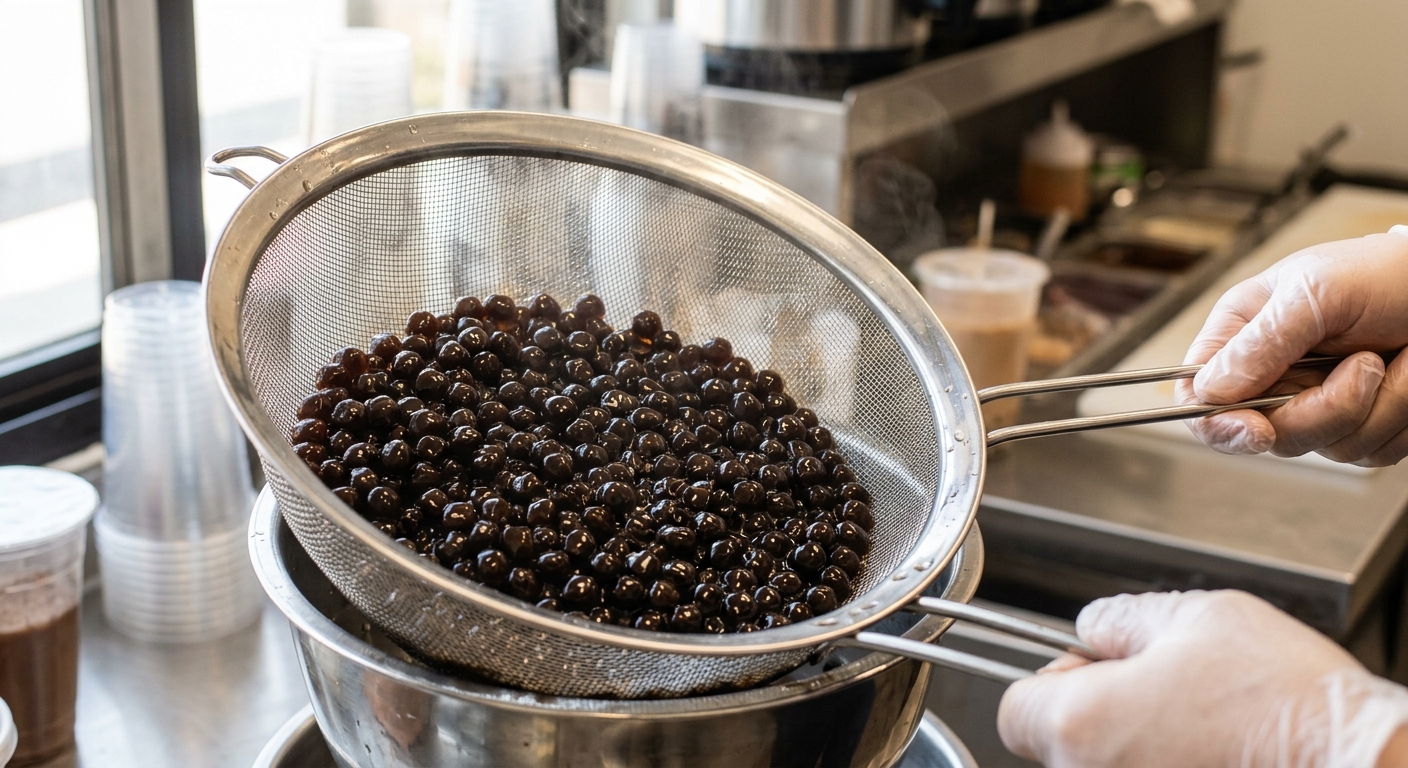
Boba pearls themselves have almost no flavor. Their delicious taste comes entirely from absorbing the brown sugar, honey, or fruit syrups they are soaked in after cooking.
If a factory uses a low-grade tapioca starch that has not been properly washed, the starch will carry a muddy, earthy, or fermented smell. This bad smell will completely ruin the delicate flavor of the brown sugar syrup. High-quality tapioca starch is heavily filtered to be perfectly white and completely odorless. This clean base allows the boba to act like a sponge, soaking up sweet flavors perfectly without any bad aftertaste.
For large boba manufacturers, running out of tapioca starch or facing sudden price spikes can shut down factory lines and ruin profit margins. The global demand for bubble tea is growing every year, putting pressure on raw material supplies.
Procurement managers must secure long-term contracts with reliable suppliers who can guarantee consistent moisture levels, bright white color, and strict food safety certifications. Sourcing directly from major farming regions ensures you bypass expensive middlemen and protect your budget. For a complete strategy on securing your supply, read our tapioca starch sourcing and procurement guide for Indonesia.
Producing top-tier boba pearls requires an ingredient partner who understands the strict demands of the bubble tea industry. Blue Highcrest provides premium, industrial-grade native tapioca starch that is perfectly milled and washed to deliver the ultimate chewy texture.
Our wholesale tapioca starch delivers:
Maximum Chewiness: High amylopectin levels for the perfect bouncy “QQ” texture.
Odorless and Pure: Heavily washed to remove all earthy smells, ensuring perfect syrup flavor absorption.
Predictable Factory Performance: Standardized moisture and particle sizes so your dough mixers and forming machines run flawlessly every time.
Ready to improve the texture and shelf life of your boba pearls? Contact the technical sales team at Blue Highcrest to request a commercial sample, complete Certificates of Analysis (COA), and bulk factory pricing.
If the dough crumbles, the tapioca starch was not properly pre-gelatinized during the mixing phase. You must use boiling hot water when first mixing the starch. The extreme heat forces a small portion of the starch to swell instantly, creating the sticky “glue” needed to hold the rest of the dough together.
After the boba pearls are formed, factories often dust them with a very thin layer of dry tapioca starch. This dry powder acts as a barrier, absorbing any surface moisture and stopping the raw pearls from clumping together inside the vacuum-sealed packaging.
No. Cassava flour contains the whole root, including natural plant fibers. If you use cassava flour, the boba will turn out dense, opaque, and grainy. You must use pure extracted tapioca starch to get the smooth, semi-clear, and chewy texture of authentic boba.
Cold temperatures rapidly accelerate starch retrogradation, forcing the starch molecules to crystallize. To fix this, ensure the boba is boiled long enough to fully cook the center, and soak the cooked pearls in a rich sugar syrup. The sugar binds with the water inside the pearl, which helps slow down the hardening process.