
For noodle manufacturers and R&D food scientists, the global market for instant noodles is changing fast. Consumers are moving away from greasy, deep-fried wheat noodles and asking for healthier, gluten-free, and air-dried options. However, removing wheat gluten and skipping the deep-fryer creates massive headaches on the factory floor. Gluten-free noodle doughs often tear on the rollers, take way too long to get soft in hot water, or shatter into tiny broken pieces inside the package before the customer even opens it.
By combining whole-root cassava flour with native tapioca starch, production directors can solve these mechanical and texture problems. Together, these clean-label root ingredients build a strong, flexible dough that runs smoothly through industrial noodle machines, rehydrates quickly in a cup of boiling water, and delivers the bouncy, chewy bite that noodle lovers expect.
Direct Answer: Cassava flour and tapioca starch work together to replace the structure of wheat gluten in commercial instant and air-dried noodles. Their low gelatinization temperatures allow dry noodles to absorb boiling water rapidly for fast rehydration, while their high amylopectin content creates an elastic, springy bite that stops the noodle block from shattering during shipping.
In a commercial noodle factory, the dough is not pushed through a high-pressure extruder like Italian pasta. Instead, instant noodles are usually made on a “sheet-and-slit” line. The dough is pressed between heavy metal rollers into a thin, flat ribbon and then sliced into thin strands by rotating cutting blades (slitters).
Without wheat gluten to hold the dough together, standard gluten-free flours like rice or corn crumble under the pressure of the rollers. The dough sheet cracks at the edges, falls apart on the conveyor belt, and clogs the cutting blades.
Cassava flour fixes this problem because it is naturally sticky and flexible when mixed with warm water. It acts like a natural binder that holds the dough ribbon together as it gets rolled thinner and thinner. This is the exact same mechanical flexibility that helps bakeries master cassava flour in flatbread and tortilla manufacturing. By using cassava as an allergen-free wheat flour substitute for food manufacturing, your production line can sheet and slit thin noodle strands at high speeds without constant line stops.
Traditional instant noodles cook in just three minutes because they are flash-fried in hot oil. As the water inside the noodle boils away in the fryer, it leaves behind thousands of tiny, microscopic holes. When the customer pours boiling water into the cup at home, the water rushes into those tiny holes and softens the noodle instantly.
Air-dried noodles are much healthier because they are dried with hot air instead of oil. However, air-drying closes up the surface of the noodle, making it dense and glass-like. Because there are no tiny oil holes, hot water struggles to get inside, leaving the customer with a hard, undercooked noodle even after waiting five minutes.
Cassava flour solves this slow rehydration issue naturally. Cassava starch swells and cooks (gelatinizes) at a much lower temperature than wheat, corn, or rice starch—starting around 60°C to 65°C. Furthermore, cassava flour is naturally very porous and loves to soak up water. When boiling water hits an air-dried cassava noodle, the flour quickly pulls the hot water into the center of the strand. To calibrate your mixing tanks for this exact moisture uptake, your R&D team should review our guide on the cassava flour water absorption ratio and technical specs.
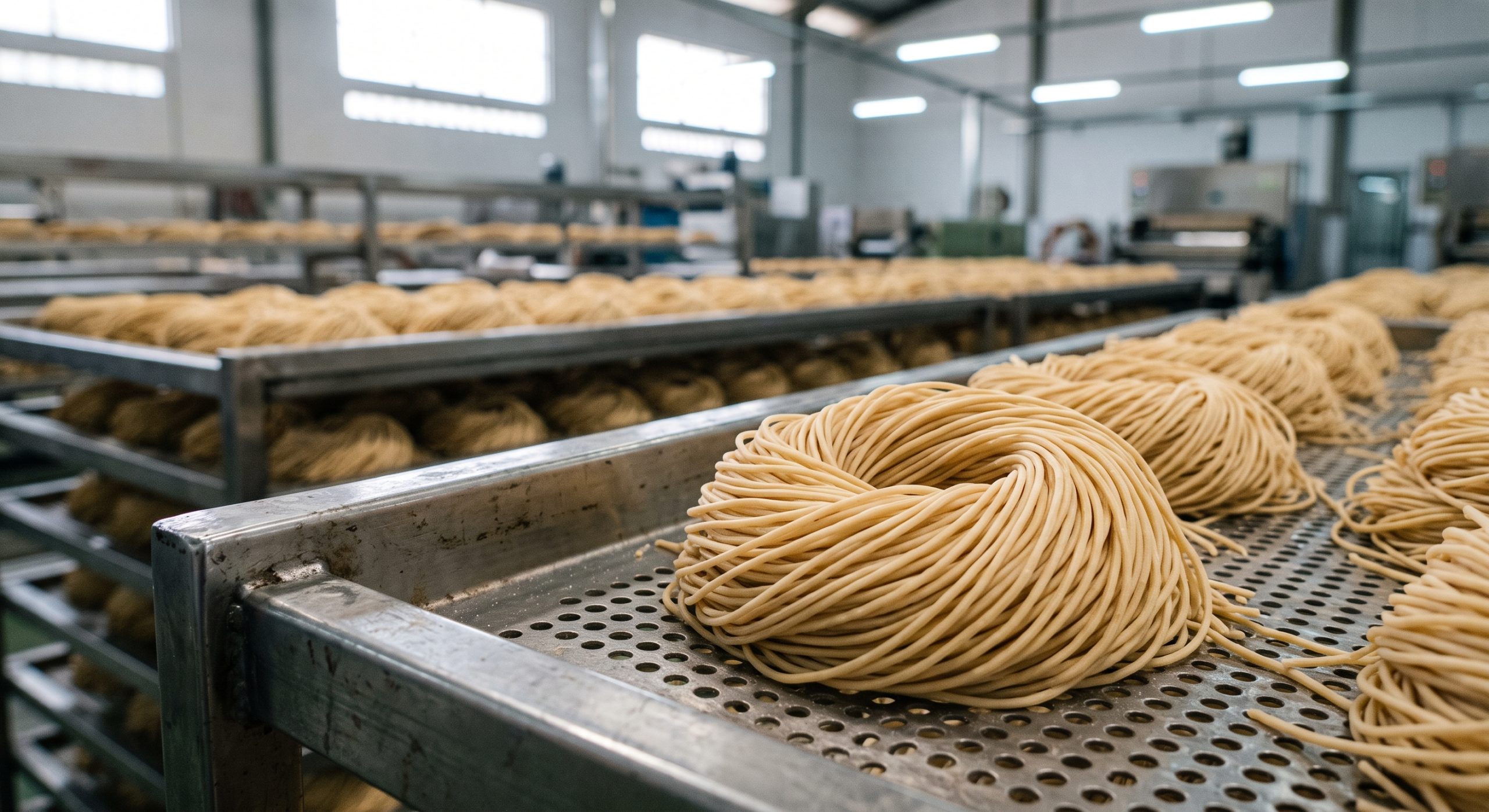
Nobody wants to eat an instant noodle that turns slimy, mushy, or breaks apart when you pick it up with chopsticks. In Asian noodle markets, consumers judge a noodle by its “Q” texture—meaning it must be springy, bouncy, and chewy.
To get the best texture in a gluten-free or reduced-wheat noodle, food scientists use a smart two-part system: Cassava Flour for the body, and Native Tapioca Starch for the bounce.
Cassava Flour (The Body): Because it is milled from the whole root, it contains natural plant fibers that give the noodle a traditional, opaque look and a firm, wheat-like bite.
Tapioca Starch (The Bounce): Pure tapioca starch adds extreme elasticity. During the factory steaming tunnel stage, the tapioca starch forms a tight, stretchy gel network that locks the cassava flour in place.
This combination also keeps the soup broth clean. When cheap gluten-free noodles sit in hot soup, the starch leaks out into the water, turning the clear broth into a thick, cloudy paste. A balanced cassava and tapioca network traps the starch inside the noodle where it belongs. We use this exact same formulation science when applying tapioca starch in gluten-free pasta to reduce cooking loss and improve texture.
For production directors and brand owners, broken noodles mean lost money. After the noodles are steamed, cut into wavy blocks, and dried, they are dropped into plastic cups or foil pouches and shipped across the world.
If a gluten-free noodle block is too brittle, the vibrations of delivery trucks will shatter the dry noodles. When a customer opens a bag and finds a pile of broken noodle crumbs at the bottom, they blame the brand for poor quality.
Noodles made with rice flour or corn starch are notoriously brittle when dry; they snap like thin glass. Cassava flour and tapioca starch contain long, branched starch chains (amylopectin) that dry into a much tougher, more flexible structure. When steamed properly before the drying tunnel, a cassava-based noodle block has higher bending strength (flexural strength). It can absorb the bumps and drops of global shipping while keeping the wavy noodle block completely intact.
To see how a cassava and tapioca blend upgrades your instant noodle line, compare its factory and cooking performance against standard alternatives:
| Performance Factor | Cassava Flour + Tapioca Starch Blend | 100% Rice Flour Base | Traditional Wheat Flour Base |
| Hot Water Rehydration (Air-Dried) | Fast (3 to 4 minutes in boiling water) | Slow (often stays hard in the center) | Moderate to Fast |
| Dry Breakage Resistance | High (flexible dry strands resist shattering) | Poor (very brittle; high crumb waste in bags) | High (strong gluten network) |
| Cooked Bite & Chewiness | Excellent (bouncy, elastic, and smooth) | Low (soft, short bite that breaks easily) | Excellent |
| Soup Broth Clarity | Clear (low starch leaking into the bowl) | Cloudy (high cooking loss makes soup milky) | Clear to Moderate |
| Allergen & Label Status | 100% Gluten-Free, Grain-Free, Clean Label | Gluten-Free | Contains Gluten / Wheat Allergen |
Creating an air-dried or instant noodle that cooks fast and stays chewy requires raw ingredients with strict, reliable specifications. If the moisture level or starch quality changes from batch to batch, your steaming and drying tunnels will fail. Blue Highcrest supplies commercial noodle factories with premium whole-root cassava flour and industrial-grade native tapioca starch sourced directly from verified mills in Indonesia.
Our noodle-grade ingredients deliver:
Fast Gelatinization: Naturally low cooking temperatures that help your air-dried noodles soften quickly in hot water.
High Elasticity: Superior peak viscosity that gives your noodles a bouncy, authentic chew and stops breakage in the package.
Clean, Neutral Flavor: Heavily washed and refined so your savory soup seasonings and oils shine through with zero earthy or sour off-notes.
Ready to stop noodle breakage and speed up your rehydration times? Contact the technical sales team at Blue Highcrest to request a commercial sample kit, complete Certificates of Analysis (COA), and bulk container pricing.
Yes! In fact, most traditional wheat instant noodles already use 10% to 20% tapioca starch mixed into the wheat flour. Adding tapioca starch or cassava flour to a wheat noodle lowers your raw material costs, makes the noodle bouncier, and reduces the amount of oil the noodle soaks up during frying.
Clumping happens when the surface of the noodle gets too wet in the steamer, causing the starch on the outside to turn into glue. To fix this, lower your initial mixing water slightly, make sure your steamer uses dry saturated steam without dripping water droplets, and blow cool air over the noodles right after steaming before they enter the cutting and drying zones.
While every factory line is different, many R&D teams start with a base of 60% to 70% whole-root cassava flour (or rice flour) for structure, blended with 30% to 40% native tapioca starch for elasticity and bounce. Pre-gelatinizing a small part of the starch with boiling water during mixing will also help the dough roll smoothly.
Yes. For cup noodles (where the consumer just pours hot water over the dry block and waits 3 minutes), you should roll the noodle strands slightly thinner and use a higher ratio of tapioca starch for faster water uptake. For pack noodles that are boiled in a pot on the stove, you can roll the strands thicker for a heartier, restaurant-style chew.