
Blending gluten-free flours in-house costs hotel and cruise line kitchens up to 35% more in hidden operational expenses than utilizing a standardized, commercial-grade gluten-free flour premix. These invisible drains stem from specialized culinary labor allocation, cross-contamination liability, variable starch hydration behavior, and bulk multi-ingredient inventory management.
In high-volume hospitality and cruise ship environments, menu execution relies entirely on predictability, speed, and strict risk mitigation. As consumer demand for premium, allergen-free dining options reaches an all-time high, corporate chefs and food and beverage (F&B) directors are expanding their scratch-baked gluten-free offerings. However, tasking kitchen staff with sourcing, scaling, and blending individual raw starches and alternative flours at the property level introduces massive operational inefficiencies.
Analyzing the true cost-in-use metrics reveals why moving away from manual batch-mixing toward a single, certified gluten-free baking flour premix engineered for foodservice protects both your operational margins and guest safety.
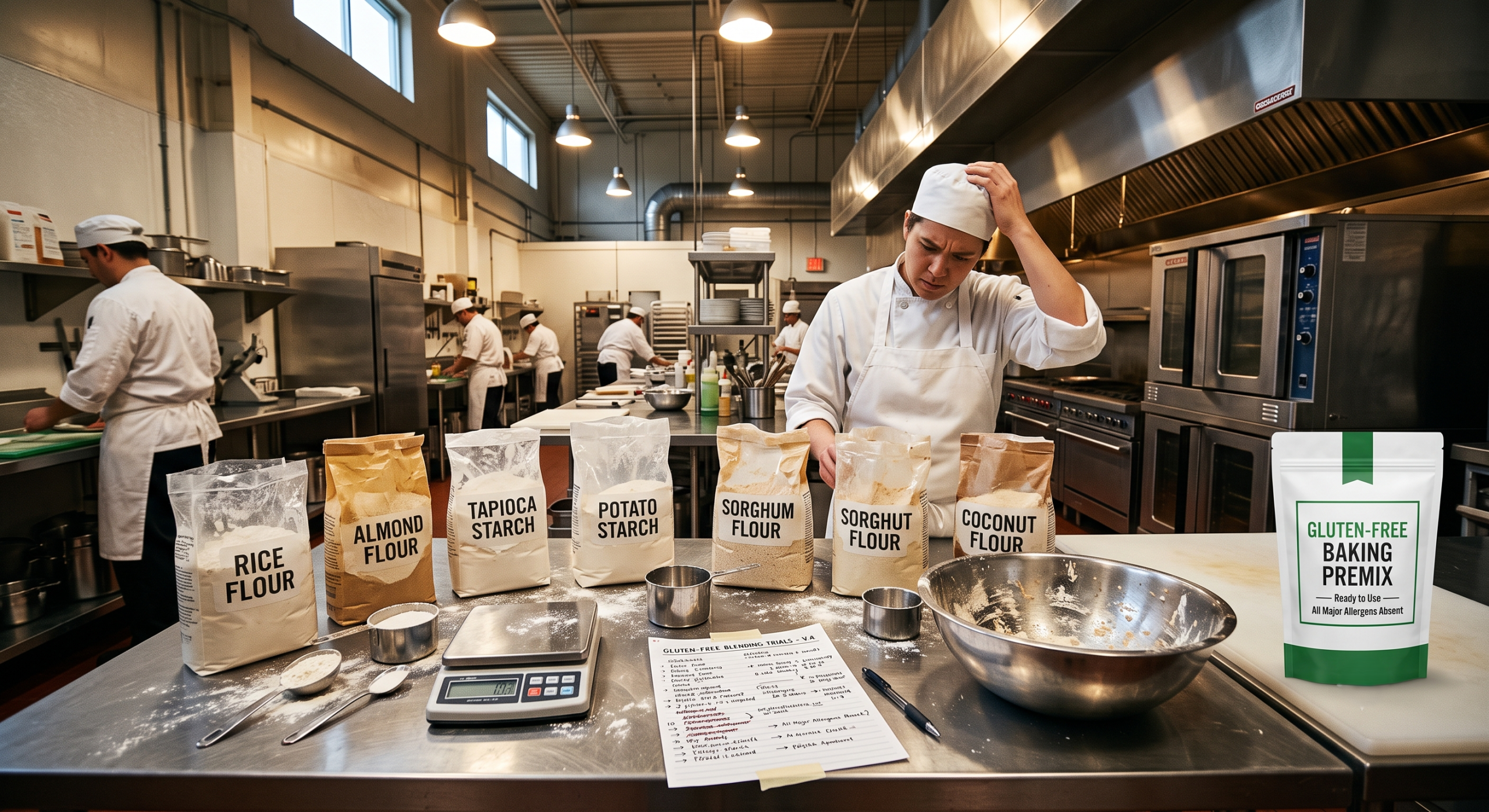
When an F&B operation decides to formulate its own gluten-free base blend by purchasing separate bags of rice flour, tapioca starch, potato starch, and xanthan gum, the raw material invoice covers only a fraction of the actual production cost.
Gluten-free baking requires exact micro-measurements. Unlike wheat flour, a slight deviation in the ratio of isolated starches to whole-root flours alters the final hydration capacity and crumb elasticity. Committing prep cooks to meticulous micro-scaling drives up labor hours and introduces immediate batch variance and material shrinkage due to human error.
Managing four or five individual stock-keeping units (SKUs) just to create a single baking base multiplies purchasing friction. On a cruise vessel with tight provisioning windows, if one component such as the binding hydrocolloid faces a shipping delay, the entire custom baking pipeline stalls.
The hallmark of a premium hotel brand or luxury cruise line is predictability. A pastry or artisan bread served at a property in London should look, taste, and behave identically to one served on a vessel in the Mediterranean.
When kitchens blend in-house, consistency becomes impossible to maintain globally. Ambient humidity variations in different geographic zones alter the native moisture absorption profiles of bulk-stored raw flours. Furthermore, different kitchen teams vary their mixing shear times, leading to inconsistent starch swelling.
Transitioning to a pre-engineered, standardized premix ensures that the core water binding metrics, structural density, and gelatinization parameters are preset at the manufacturing level. This allows line cooks to simply weigh the mix, add water and lipids, and execute a flawless product every time, eliminating guest complaints regarding dry, crumbly, or dense baked goods. To understand the baseline starch dynamics that govern these properties, see our technical breakdown of Cassava Flour vs. Tapioca Starch Starch Mechanics.
Evaluating your operations through a comprehensive cost-per-serving matrix highlights the systemic drains of manual culinary preparation.
| Operational Factor | Manual In-House Blending System | Standardized Foodservice Premix |
| Procurement Overhead | High (Managing 4–6 separate raw ingredient SKUs) | Low (Single, unified baking base SKU) |
| Labor Time (Per 50kg Batch) | 35–45 minutes (Sourcing, scaling, multi-stage blending) | < 2 minutes (Direct weigh-and-pour execution) |
| Allergen Liability Risk | High (Open airborne dust contamination potential) | Zero (Packaged in a dedicated, certified facility) |
| Batch Yield Predictability | Variable (Prone to human scaling errors and waste) | Strict (Standardized industrial hydration performance) |
| Flavor/Texture Consistency | Fluctuates based on shifting raw material lots | Monitored via strict factory QA tolerances |
By consolidating your raw material pipeline into a high-performance, single-step base, your operation minimizes the hidden costs that continuously trim your F&B margins. This shift provides an elite, plug-and-play allergen-free wheat flour substitute for large-scale production.
Beyond the financial matrix, the most significant risk of in-house blending is celiac compliance and legal liability.
When kitchen staff open raw, dusty bags of loose starches and flours in a standard preparation environment, fine particulates remain suspended in the air for hours. This creates an immediate risk of cross-contact with gluten-containing surfaces, utensils, and equipment. For an airline or cruise line operating under strict maritime or international health audits, an unverified allergen claim can trigger severe regulatory penalties and brand damage.
A commercial, factory-sealed gluten-free premix mitigates this hazard. The product arrives pre-blended from a dedicated, certified allergen-free facility, requiring zero open air sifting or aggressive handling on-site. This allows your culinary safety teams to maintain flawless audit compliance.
To successfully phase out costly in-house blending across your hotel portfolio or fleet:
Consolidate Your Flour Registry: Direct global purchasing desks to replace separate alternative flour SKUs with a single, functional premix baseline.
Standardize Hydration Standard Operating Procedures (SOPs): Issue unified water-to-premix calculation sheets to line cooks to lock in exact batch yields.
Execute Certified Pre-Packaged Training: Train preparation teams to utilize sealed bags directly, completely eliminating airborne dust vectors in the pastry galley.
Do not let hidden labor drains, inventory complexity, and allergen risks compromise your hospitality group’s profitability and brand reputation. Blue Highcrest delivers premium, launch-ready gluten-free baking flours and custom premixes tailored to meet the strict commercial, culinary, and regulatory benchmarks of global hospitality brands.
Ready to protect your F&B margins and optimize galley efficiency? Reach out to our commercial applications desk at Blue Highcrest to secure a 10kg trial sample kit, complete Certificates of Analysis (COA), and custom volume pricing structures for your regional distribution centers.
Without industrial-grade blending equipment, raw starches and xanthan gum do not distribute uniformly throughout the batch. Pockets of dough that lack sufficient binding polymers cannot retain gas during proofing or baking, resulting in dense centers or structural collapse post-bake.
Yes. Our commercial premix line features balanced starch gelatinization metrics and optimized absorption profiles, allowing culinary teams to utilize it as a single, multi-functional base for artisan breads, pastries, pizza crusts, and frying batters by simply adjusting fluid hydration ratios.
Blue Highcrest maintains continuous processing and manufacturing loops, ensuring your primary distribution hubs receive consistent container flow and fixed contract pricing, shielding your seasonal operational budgets from sudden spot-market surges.
Every production run of Blue Highcrest gluten-free baking flour is manufactured under strict GFSI-recognized food safety systems, backed by certified testing validation to confirm it remains fully non-GMO, gluten-free, and allergen-compliant for seamless international customs clearance.