
In the highly competitive world of private label snacking, the rules of shelf appeal have completely changed. Consumers are no longer just looking at the calorie count; they are aggressively auditing the ingredient list. The modern benchmark for a premium, clean-label snack is “ingredient minimalism”—specifically, the highly coveted five-ingredient label.
For brand owners and R&D food technologists, reducing a cracker or gourmet chip recipe to just five recognizable ingredients is a massive technical challenge. Traditional commercial crackers rely on a long list of dough conditioners, synthetic emulsifiers, modified starches, and artificial preservatives to survive high-speed factory lines. By transitioning to a whole-root base like cassava flour, manufacturers can eliminate these artificial crutches. Cassava’s natural binding and expansion properties allow private label brands to achieve perfect crunch and structural integrity with absolute label transparency.
Direct Answer: Ingredient minimalism requires stripping out synthetic dough conditioners, gums, and modified starches from snack formulations. By utilizing premium cassava flour as a single-ingredient structural base, R&D teams can naturally achieve the binding, expansion, and crunch needed for commercial vegan crackers and gourmet chips, easily reducing the final recipe to five recognizable ingredients or fewer.
Major retail buyers are acting as the ultimate gatekeepers for ingredient minimalism. Premium supermarket chains are actively rejecting private label snack pitches that feature long, unpronounceable chemical lists. Shoppers want to read the back of a cracker box and see items they can find in their own kitchen: flour, oil, salt, water, and a natural seasoning.
Every time you add a hydrocolloid gum to prevent dough tearing, or a chemical preservative to extend shelf life, you downgrade your product from the “gourmet premium” tier to the “ultra-processed commodity” tier. Understanding how these gatekeepers operate is crucial for your brand’s retail survival, a topic we cover deeply in our analysis of clean-label ingredient trends in US and EU food retail.
The hardest part of formulating a five-ingredient vegan cracker is replicating the structural elasticity that usually comes from wheat gluten, xanthan gum, or chemically modified starches. When you remove these from a gluten-free recipe, the dough often crumbles on the sheeting line or shatters in the baking oven.
Cassava flour solves this factory bottleneck naturally. Because it is milled from the whole root, it contains long-chain starches that provide exceptional elasticity when hydrated. When run through commercial sheeting rollers, a simple cassava dough holds together flawlessly without tearing. Furthermore, it naturally replaces the need for synthetic cross-linked starches. You can learn exactly how to phase out these chemicals in our guide to replacing E1442 and modified starches with native tapioca starch.
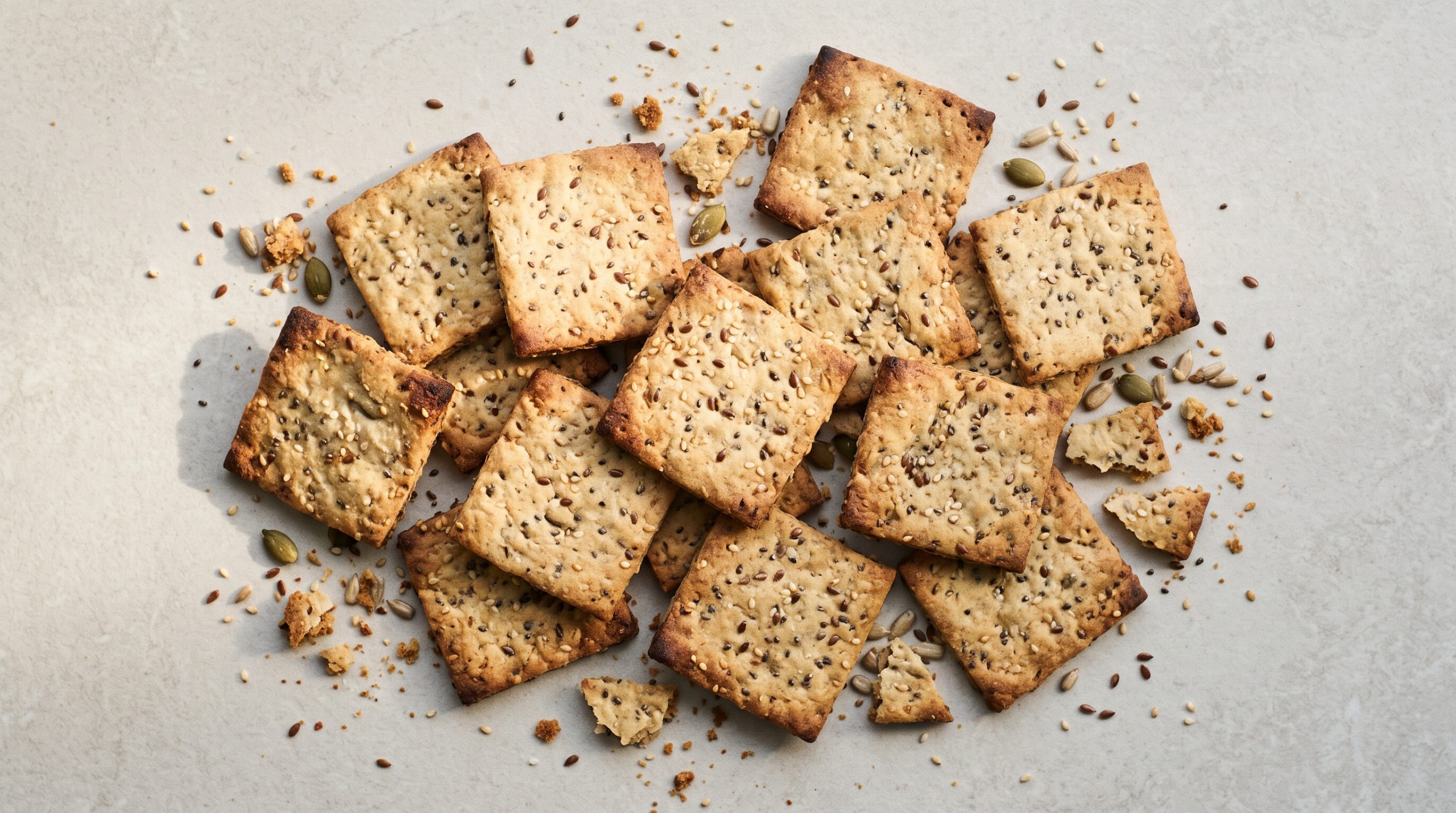
When frying gourmet root vegetable chips or baking premium crackers, the fat you choose is just as important as the flour. Traditional cheap snacks use partially hydrogenated oils or require synthetic antioxidants (like BHT or TBHQ) to stop the snack from going rancid on the shelf, which instantly ruins a minimal ingredient list.
To keep the label short, clean, and highly marketable, formulators must pair their cassava base with highly stable, premium fats. Utilizing RSPO-certified palm oil or high-oleic sunflower oil provides the high smoke points needed for commercial baking and frying without breaking down. These oils naturally resist oxidation, allowing you to confidently print a “Zero Trans-Fat” claim on the front of the bag while completely avoiding chemical preservatives on the back.
A common misconception is that formulating a premium, minimalist snack will destroy your profit margins. In reality, streamlining your ingredient deck can actually lower your operational costs.
When you remove eight different micro-ingredients (like isolated gums, synthetic emulsifiers, and artificial colors) from your procurement list, you simplify your supply chain. Your warehouse requires less storage space, your mixing operators make fewer batching errors, and your allergen clean-down times are drastically reduced. This streamlined approach to manufacturing is the foundation of building a highly profitable SKU. Dive deeper into the financial mechanics of this strategy in our vegan cracker private label margin-positive SKU guide.
To clearly see how cassava flour transforms a product from an ultra-processed commodity into a premium minimalist snack, compare these two commercial cracker formulations:
| Component | Traditional Ultra-Processed Cracker (12+ Ingredients) | Modern Minimalist Cracker (5 Ingredients) | Factory Benefit of Minimalism |
| Base Flour | Bleached Wheat Flour, Degermed Corn Meal | Whole-Root Cassava Flour | Naturally gluten-free, grain-free, and binds perfectly. |
| Binding Agents | Xanthan Gum, Guar Gum, Vital Wheat Gluten | (None required) | Eliminates expensive hydrocolloids from the mixing tank. |
| Fats & Oils | Soybean Oil, Mono- and Diglycerides | High-Oleic Sunflower Oil or RSPO Palm Oil | Achieves zero trans-fat without synthetic emulsifiers. |
| Preservatives | Calcium Propionate, TBHQ, BHT | Sea Salt | Uses natural salt to lower water activity and preserve shelf life. |
| Flavor & Color | Artificial Flavorings, Caramel Color | Rosemary Extract or Natural Herbs | Provides premium sensory appeal with recognizable kitchen staples. |
Before your food technologists begin running test batches, your procurement and brand teams must be fully aligned on the target label. If marketing promises a five-ingredient paleo cracker, but R&D formulates with a complex modified starch, the project will fail at the final retail pitch.
To ensure your private label launch hits both its nutritional and financial targets, your team must use a strict product brief from day one. Set your hard limits on total ingredient count, allergen status, and allowable fats before touching the mixing bowl. To structure this process, utilize our comprehensive private label healthy snacks formulation and positioning checklist.
Transitioning your snack portfolio to a minimalist, five-ingredient label requires a base carbohydrate that acts as a true multi-functional powerhouse. Blue Highcrest provides commercial snack factories with premium, industrial-grade cassava flour engineered to replace artificial binders and starches.
Our commercial cassava flour delivers:
Natural Dough Elasticity: Smooth, cohesive sheeting on automated cracker lines without the need for added gums.
Crispy, Blistered Bake: Promotes an airy, satisfying crunch and beautiful golden color in high-heat ovens.
100% Clean Label Purity: Single-ingredient declaration (“Cassava Flour”) that fits perfectly into paleo, vegan, and minimalist dietary profiles.
Ready to strip out the chemicals and build a margin-positive, five-ingredient cracker? Contact the technical sales team at Blue Highcrest to request a commercial sample kit, complete Certificates of Analysis (COA), and wholesale factory pricing.
Yes. Because cassava flour is milled from the whole root, it contains a unique matrix of long-chain starches and natural plant fibers. When hydrated with warm water, this matrix becomes highly elastic, allowing industrial sheeters to roll the dough paper-thin without the edges tearing or cracking.
Not if formulated correctly. By managing the water activity (aw) through proper baking and using highly stable, oxidation-resistant fats (like high-oleic sunflower oil or RSPO palm oil), a five-ingredient cracker can easily achieve a stable 9- to 12-month ambient shelf life without chemical preservatives.
No. Ingredient minimalism actually allows premium flavors to shine. Without heavy emulsifiers or chalky modified starches masking the taste, simple additions like cracked black pepper, sea salt, or roasted garlic become much more vibrant and pronounced on the palate.
Absolutely. Cassava flour is widely recognized by retail category managers as a premium, clean-label ingredient that commands a higher retail price point. It signals to the consumer that the brand is focused on grain-free, allergen-friendly, and natural whole-food sourcing.