
Making simple plant-based ground beef or soft chicken nuggets is common today. However, making a plant-based chicken breast or steak that actually tears, shreds, and chews exactly like real whole-muscle meat is a much harder challenge. Consumers are getting tired of mushy plant-based patties. They are now looking for the realistic, stringy bite of premium whole-cut meats.
To make this leap in quality, modern food factories are turning to an advanced manufacturing process called High-Moisture Extrusion (HME). By feeding highly purified pea protein isolate into these powerful machines, food makers can completely transform dry plant powders into long, juicy, chewy meat fibers that easily fool the senses. For brand directors and R&D food scientists, mastering this technology is the key to dominating the next generation of the plant-based meat market.
Direct Answer: Pea protein isolate is the perfect raw material for High-Moisture Extrusion (HME) to create realistic whole-cut plant-based meats. Under extreme heat and mechanical pressure, the highly purified proteins unwind and lock together into long, stringy fibers. As the mixture cools, it forms a dense, chewy structure that perfectly mimics the tear and bite of real animal muscle.
Traditional plant-based meats, like standard burger patties, are often made using low-moisture extrusion (making dry, sponge-like soy or pea crumbles that are later soaked in water). While this works for ground meats, it cannot create the long, solid fibers needed for a vegan chicken breast or beef strip.
High-Moisture Extrusion (HME) solves this. In an HME machine (a twin-screw extruder), the pea protein isolate is mixed with a very high amount of water—often between 50% and 70%. The machine cooks this wet dough under extreme heat and massive pressure. The twin screws inside the machine pull, stretch, and knead the hot protein dough, forcing the molecules to align in the same direction. Finally, the hot mixture is pushed through a long cooling die, which freezes those stretched proteins into permanent, solid, meat-like strings.
When running an expensive HME line, you cannot cut corners on your raw materials. Many factories try to save money by using a cheaper pea protein concentrate (which is only around 65% protein) instead of a premium pea protein isolate (which is 80% to 85% protein). This is a costly mistake that ruins the texture of the fake meat.
Pea protein concentrate contains a large amount of raw plant fiber and starch. Inside the high-moisture extruder, these leftover starches act like roadblocks. They stop the protein molecules from linking together, causing your plant-based chicken to turn out crumbly and mushy instead of stringy and chewy. Insoluble fibers also create a dry, sandy feeling in the mouth. This is the exact same problem that ruins baked goods, as we explain in our guide on fixing pea protein isolate high-protein bakery chalkiness.
To clearly see why you must use an isolate grade for whole-cut meats, look at this performance comparison table. For more details on these formulation choices, review our complete pea protein isolate vs. pea protein concentrate formulation guide.
| Extrusion Feature | Premium Pea Protein Isolate (80%+) | Pea Protein Concentrate (65%) |
| Fiber Formation | Excellent (forms long, continuous, stringy meat fibers) | Very Poor (crumbly, short, and mushy texture) |
| Water Binding | High (creates a juicy, moist bite) | Low (results in a dry, sandy mouthfeel) |
| Flavor Profile | Very clean and neutral | Highly earthy, bitter, and “beany” |
| Machine Running | Smooth, predictable pressure in the extruder | Can clog cooling dies due to burnt starches |
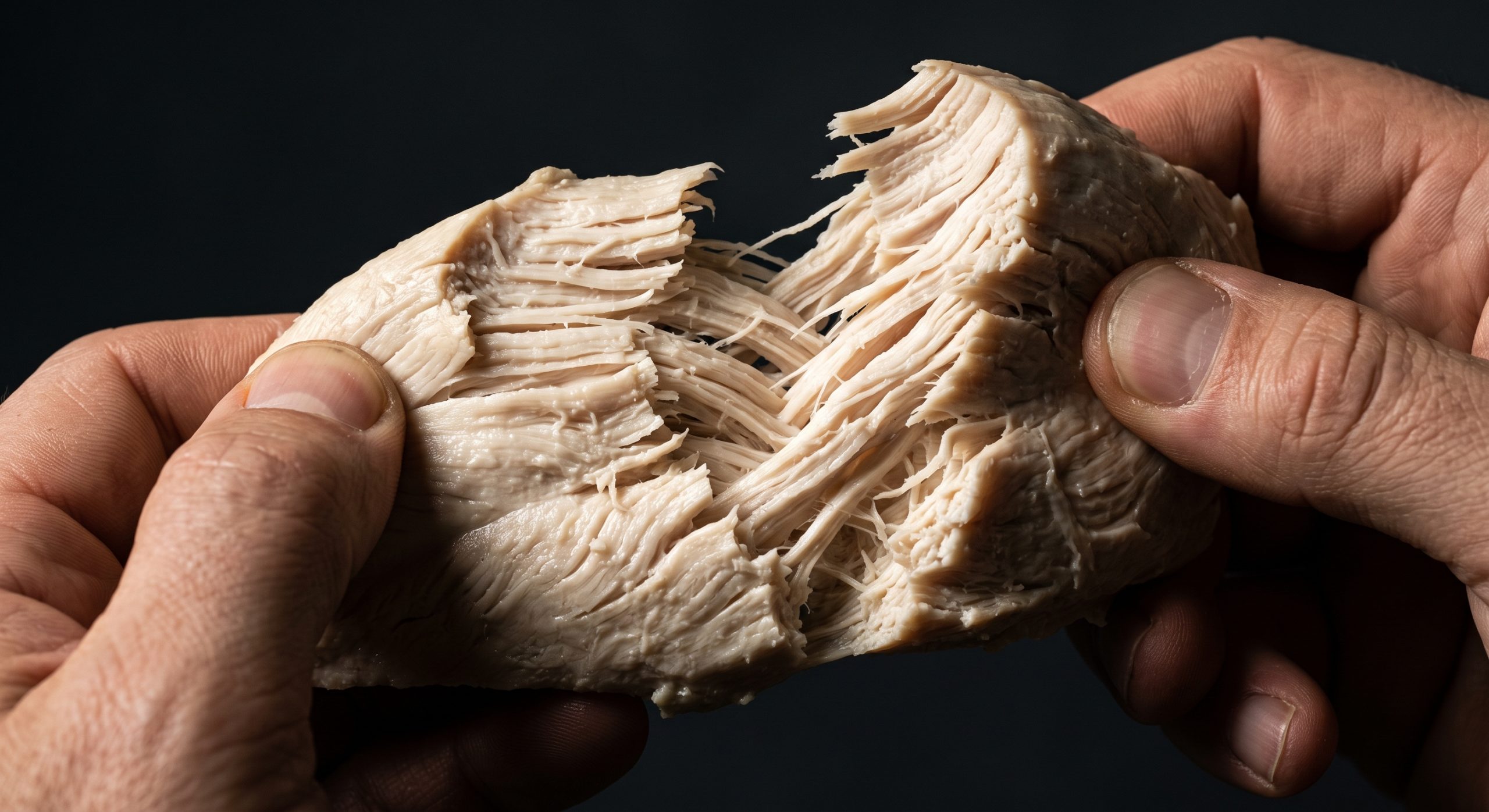
To get the perfect meat texture, you have to understand how pea protein reacts to heat and water. In its natural powder form, pea protein molecules are tightly folded up like tiny balls of yarn.
When the powder enters the hot cooking zone of the HME machine, the extreme heat and water force those tiny balls of yarn to unravel into long strings. This is a process called thermal unfolding. The screws inside the machine then comb all these strings so they face the exact same direction. We use a very similar form of protein unfolding science, just without the intense mechanical stretching, when we use pea protein isolate in dairy-free yogurt gelation to create a smooth, spoonable texture. In the extruder, the added directional pressure is what turns that smooth gel into tough meat fibers.
The most critical part of the High-Moisture Extrusion process happens at the very end of the machine, inside the cooling die. If you get the cooling process wrong, all your perfect meat fibers will melt back into a liquid paste.
As the hot, stretched protein leaves the cooking screws, it enters a long metal tube that is cooled by cold water on the outside. This sudden drop in temperature forces the protein strings to lock into place permanently. Food technologists must carefully control the temperature of this cooling die. If it cools too fast, the plant-based meat becomes rubbery and tough, like a tire. If it cools too slowly, steam bubbles form inside, making the meat spongy and full of holes.
During this stage, many R&D teams also inject liquid plant fats (like sunflower oil or cocoa butter) into the mix. A high-quality pea protein isolate acts as an excellent emulsifier, trapping these fats deep inside the meat fibers. When a consumer cooks the vegan steak at home, those trapped fats melt, creating a juicy, sizzling eating experience.
Texture is only half the battle; flavor is equally important. A major challenge with pea protein is its natural flavor. Unwashed, cheap pea protein tastes strongly of green, earthy, raw vegetables. If your plant-based chicken breast tastes like a bowl of pea soup, consumers will instantly reject it.
In an HME machine, you are using a massive amount of protein to build the meat structure. This means any bad flavors in the powder will be highly concentrated in the final product. To fix this, you must buy a premium pea protein isolate that has been thoroughly washed and filtered at the factory to remove all flavor oils. A clean, neutral-tasting isolate acts like a blank canvas, allowing your savory chicken or beef seasonings, yeast extracts, and smoke flavors to shine perfectly.
Running a High-Moisture Extrusion line requires massive investments in machinery. Do not risk your expensive factory runs on low-quality raw materials. Blue Highcrest provides premium, industrial-grade pea protein isolate engineered specifically for perfect fiber formation in HME machines.
Our extrusion-grade pea protein isolate delivers:
Maximum Fiber Strength: Highly purified proteins that stretch easily into long, realistic meat shreds.
Unmatched Flavor Purity: Extensively washed to remove bitter, earthy off-notes, ensuring a clean meat flavor.
Reliable Global Supply: Fully certified for large-scale factories worldwide. Discover how we manage our pea protein isolate bulk sourcing in Europe to keep your factory running without delays.
Ready to build a better, juicier plant-based whole-cut meat? Contact the technical sales team at Blue Highcrest to request a commercial sample kit, complete Certificates of Analysis (COA), and wholesale pricing.
No. Standard low-moisture extruders (TVP machines) do not have the long cooling die required to freeze the protein fibers into solid, continuous blocks. Low-moisture machines only make dry, spongy crumbles that expand as soon as they exit the machine.
This usually happens because the cooling die is not cold enough, or the temperature in the cooking zone is too high. If the water inside the dough turns to steam before it exits the machine, the steam bubbles expand and ruin the dense meat texture, leaving you with a spongy product.
No, it is not required. While some older recipes blend wheat gluten and pea protein to make a chewy texture, using a premium pea protein isolate allows you to create incredibly strong meat fibers while keeping your product 100% gluten-free and allergen-friendly.
No. Even though the machine uses high heat and extreme pressure to change the physical shape of the protein molecules, the actual amino acids remain fully intact. Your plant-based meat will still deliver the high protein nutrition promised on your packaging.