
For food brand directors and procurement managers, securing a reliable, sustainable supply of raw materials is the biggest challenge of the modern era. As global regulations tighten around factory waste and carbon emissions, the way ingredients are manufactured must evolve. In the production of native tapioca starch and cassava flour, factories historically generated massive amounts of biological waste—specifically the root peels, the leftover fibrous pulp (bagasse), and nutrient-heavy wastewater.
Today, forward-thinking processing facilities are transforming these traditional waste products into highly valuable “side streams.” By upcycling cassava bagasse into animal feed, converting peel into organic fertilizer, and capturing process water to generate green biogas energy, the cassava supply chain is becoming a model for the circular economy. This zero-waste approach not only protects the environment but directly stabilizes the long-term price and availability of premium starch for global food manufacturers.
Direct Answer: Upcycling cassava side streams—such as peel, fibrous bagasse, and process water—transforms a traditional starch factory into a zero-waste, circular operation. By recovering the fibrous pulp for animal feed and converting wastewater into biogas to power the factory ovens, manufacturers drastically reduce their carbon footprint. For food procurement teams, this sustainable efficiency ensures a highly stable, climate-resilient supply of tapioca starch and cassava flour.
Extracting pure tapioca starch from a whole cassava root is a water-intensive and physically demanding process. The roots must be washed, peeled, rasped (grated), and heavily filtered. Traditionally, only about 25% of the total root weight becomes the final dried starch. The remaining 75% consists of water, peel, and fibrous pulp.
In the past, this massive volume of byproduct was often discarded in open fields or lagoons, leading to greenhouse gas emissions as the organic matter decayed. Today, modern processing facilities in regions like Indonesia are completely rethinking this model. Instead of paying to dispose of waste, factories are capturing every single gram of the cassava root and turning it into a secondary revenue stream. This circular agricultural model is the cornerstone of sustainable manufacturing.
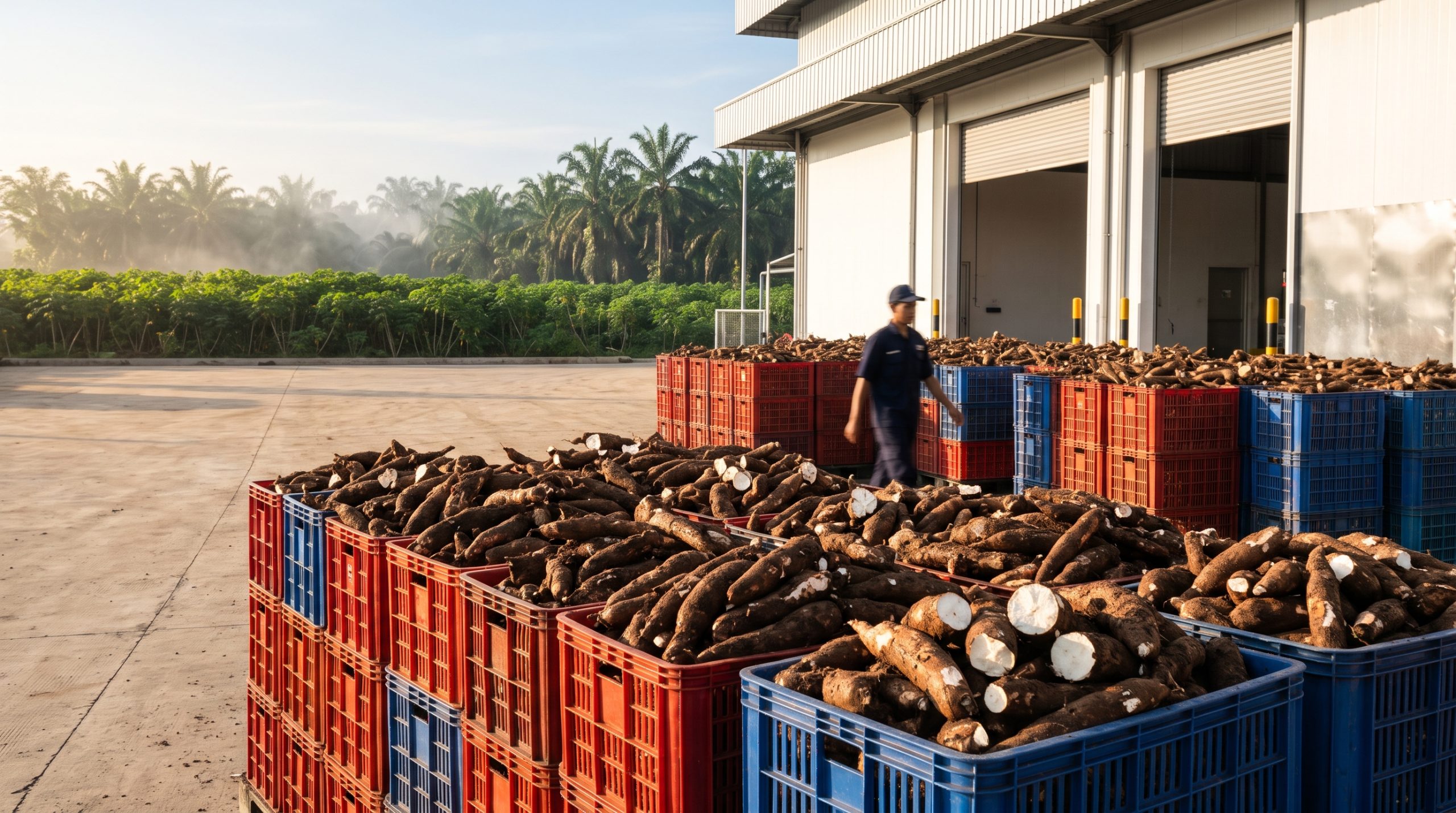
After the fine starch granules are washed out of the grated cassava, a wet, fibrous pulp remains. This leftover pulp is called “bagasse” (or onggok in Indonesia). It still contains a small amount of trapped starch and a massive amount of insoluble dietary fiber.
Instead of throwing it away, modern factories press the water out of the bagasse and dry it in the sun or with industrial dryers. This dried upcycled fiber is then sold globally as a highly nutritious, easily digestible carbohydrate base for livestock and aquaculture feed. By selling the bagasse, factories offset their own production costs, which helps keep the price of your food-grade tapioca starch lower.
Extracting starch requires thousands of liters of clean water. When this water leaves the factory floor, it is loaded with organic sugars and enzymes. If dumped directly into a river, it can harm local ecosystems. However, this same nutrient-heavy water is actually a goldmine for green energy.
Advanced factories now pipe this wastewater into giant, covered anaerobic digester ponds. Inside these sealed ponds, natural bacteria eat the organic sugars in the water and release methane gas. The factory captures this methane gas (biogas) and pipes it directly back into the facility to power the massive boilers and drying tunnels used to dry the tapioca starch.
By generating their own green electricity and heat, these factories drastically reduce their reliance on fossil fuels like coal or diesel. This is a massive step forward in lowering the overall climate impact of your ingredients, as we detail in our comparison of the carbon footprint of cassava vs wheat and corn for ESG sourcing.
The outermost layer of the cassava root is thick, woody, and covered in farm soil. When the roots are washed and peeled at the factory, these peels pile up rapidly.
Through upcycling, these peels are now collected, composted, and mixed with natural ash from the factory boilers to create a nutrient-dense organic fertilizer. This fertilizer is then given back to the local farming communities to spread on their fields for the next planting season. This regenerative farming loop keeps the soil healthy and rich in minerals, ensuring that crop yields remain high year after year without relying heavily on expensive, synthetic chemical fertilizers.
For procurement teams tracking the sustainability metrics of their supply chain, understanding the difference between an old-world factory and a modern upcycled facility is critical.
| Cassava Component | Traditional Processing (Linear) | Modern Upcycled Processing (Circular) | ESG & Factory Benefit |
| Pure Starch (25%) | Dried and sold to food factories. | Dried using green energy; sold to food factories. | High-quality, low-carbon ingredient. |
| Fibrous Bagasse | Dumped in landfills; creates methane pollution. | Pressed, dried, and sold as livestock feed. | Offsets factory costs; prevents waste. |
| Root Peels | Burned or left to rot in open fields. | Composted into organic fertilizer for farmers. | Supports regenerative agriculture. |
| Process Water | Discharged into local waterways. | Digested in covered ponds to create Biogas. | Replaces fossil fuels; powers the factory ovens. |
As a procurement manager, you know that raw ingredient prices fluctuate based on fuel costs, fertilizer prices, and waste disposal fees. An upcycled, zero-waste factory is naturally insulated against these global market shocks.
When a factory uses biogas to power its ovens, it is not affected when the price of diesel fuel skyrockets. When it creates its own organic fertilizer for farmers, the harvest is protected from global chemical fertilizer shortages. This intense operational efficiency is exactly why sourcing from established, modernized regions is so financially reliable. You can read more about how this ecosystem protects your budget in our guide on why tapioca starch from Indonesia maintains a stable price floor.
Consumers and supermarket chains are demanding absolute transparency. They want to know exactly how the food they buy impacts the planet.
When you source your cassava flour and tapioca starch from a zero-waste, upcycled supply chain, you gain a powerful marketing asset. You can confidently report reduced Scope 3 emissions on your corporate ESG filings. Furthermore, your marketing team can use this circular agriculture story to build deep consumer trust. Highlighting how your brand supports green energy and regenerative farming is a proven strategy to drive sales. Learn exactly how to leverage this on packaging in our guide to using ingredient storytelling to increase value on retail and Amazon.
Transitioning to a climate-friendly, sustainable ingredient supply chain should not require you to compromise on quality or price. Blue Highcrest supplies premium, industrial-grade tapioca starch and cassava flour sourced directly from modernized, highly efficient processing regions.
To see exactly how we manage our supply chain from the farm to your factory loading dock, review our complete tapioca starch sourcing and procurement guide for Indonesia.
Our sustainable ingredient solutions offer:
Lower Carbon Footprint: Processed in facilities utilizing biogas recovery and green energy.
Zero-Waste Philosophy: Rooted in circular agriculture where bagasse and peels are fully upcycled.
Consistent, Reliable Pricing: Insulated from global fossil fuel and synthetic fertilizer price shocks.
Ready to upgrade your ingredients and meet your company’s strict ESG reporting goals? Contact the procurement and sales team at Blue Highcrest to request a commercial sample kit, complete sustainability documentation, and wholesale factory pricing.
No. The food-grade tapioca starch is extracted and purified at the very beginning of the process. The side streams (bagasse, peel, and water) are separated from the pure starch very early on. Upcycling simply ensures that the leftover materials are used productively rather than thrown away, leaving the premium starch perfectly clean and white.
Currently, most cassava bagasse is used for animal feed because it is very coarse and retains high moisture before drying. However, emerging food technologies are beginning to heavily refine this bagasse to extract pure insoluble dietary fiber, which may soon be used as a high-fiber, low-calorie filler in human bakery products.
The captured methane gas (biogas) is piped into large industrial burners. These burners heat the massive amounts of air required for the “flash dryers”—the giant, multi-story metal tubes that instantly dry the wet starch into a fine powder. By using biogas, the factory does not have to burn coal or diesel to generate this massive heat.
Often, it does the exact opposite. While building biogas ponds requires a high initial investment from the factory, the long-term savings on electricity, fuel, and waste disposal are massive. Selling the bagasse for animal feed also generates extra income. These financial efficiencies allow the factory to keep the price of their premium tapioca starch highly competitive on the global market.