
Combining pea protein isolate (minimum 80% protein) with high-fiber cassava flour allows food developers to hit “High Protein” and “High Fiber” claims on a single front-of-pack label. This synergistic blend creates an allergen-free, clean-label matrix that stabilizes dough rheology, optimizes water activity, and maximizes product yield for commercial snack production.
For food technologists and private label buyers, staying competitive in the functional snack market requires more than just a single nutritional callout. Today’s health-conscious consumers demand multi-benefit products—specifically snacks that deliver high protein for satiety alongside fiber for digestive wellness. However, combining high-protein concentrates with functional carbohydrate bases often introduces severe textural and processing challenges.
By strategically pairing pea protein isolate with high-fiber cassava flour, brand teams can achieve a balanced, launch-ready formula that scales seamlessly across commercial extrusion and baking lines.
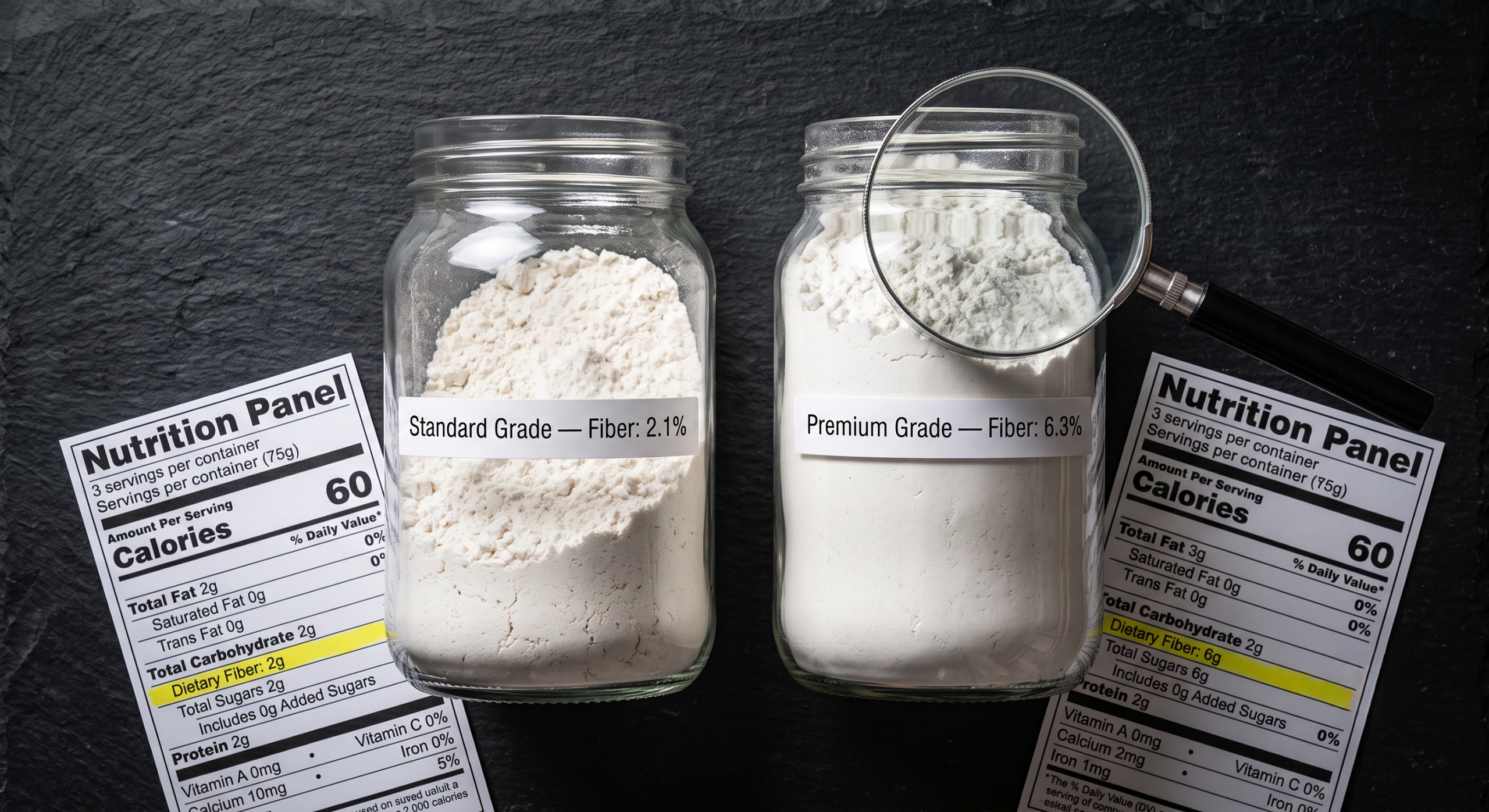
Integrating plant proteins into dough systems often results in dry, chalky, or overly dense textures due to competing hydration demands. Unlocking a successful dual-claim snack requires balancing the water binding capacity of both ingredients:
Pea Protein Isolate (PPI): Delivering 80–85% protein on a dry basis, PPI provides structural gelling, oil emulsification, and essential amino acids without introducing common allergens like soy, gluten, or dairy.
High-Fiber Cassava Flour: Acting as a grain-free, gut-friendly carbohydrate base, cassava flour provides natural dietary fiber, exceptional binding, and smooth starch gelatinization.
Synergistic Water Retention: Cassava flour’s native starch matrix buffers the moisture-absorbing intensity of pea protein isolate. This prevents retrogradation (stiffening over time) and maintains a tender, crispy bite throughout shelf life.
To successfully market a dual-claim protein and fiber snack, your R&D target metrics must align with regional regulatory standards before setting industrial parameters.
“High Protein” Claim: Must contain at least 20% of the Daily Value (DV) per Reference Amount Customarily Consumed (RACC), equating to 10g of protein per serving (based on a 50g DV).
“High Fiber” Claim: Must provide at least 20% DV of approved dietary fiber, translating to 5.6g of dietary fiber per RACC.
“High Protein” Claim: Protein must account for at least 20% of the total energy value (calories) of the food product.
“High Fibre” Claim: The snack must contain at least 6g of fibre per 100g or 3g per 100 kcal.
Formulating with high-purity ingredients ensures you hit these regulatory thresholds without blowing out serving sizes or caloric counts. For a detailed breakdown of fiber regulatory frameworks, consult our Legal High Fiber Claim Guide for EU & US Markets.
Moving a high-protein, high-fiber recipe from kitchen bench-top to an automated manufacturing line is where many private label concepts fail. High protein loads can cause dough tearing, while raw fibers can clog extruders or cause uneven puffing.
| Technical Parameter | High-Protein Alone | Cassava Flour + Pea Protein Isolate Blend |
| Dough Rheology | Tough, elastic; prone to shrinking back | Pliable, extensible; smooth sheetability |
| Water Activity | Rapid moisture migration (water activity imbalance) | Balanced hydration (water activity maintained below 0.60) |
| Texture & Mouthfeel | Gritty, dense, chalky finish | Light, crispy expansion with a clean melt-down |
| Extrusion Behavior | High die pressure; die-face clogging | Uniform cell structure; predictable expansion ratio |
By balancing the inclusion rates typically a 1:2 or 1:3 ratio of Pea Protein Isolate to Cassava Flour, you establish optimal viscosity that prevents equipment downtime while ensuring structural stability.
For private label buyers, speed-to-market depends on specifying ingredients that guarantee batch-to-batch consistency. A prototype built on unrefined whole-food starches often fails real-time accelerated shelf-life testing (ASLT).
To bridge this gap, brands must rely on refined, commercial-grade raw materials. Discover how to de-risk your commercial expansion in our guide on Private Label Healthy Snacks: Prototype vs. Launch-Ready.
Blue Highcrest provides standardized, commercial-grade ingredients that simplify dual-claim formulations:
Neutral Flavor Profiles: Our non-GMO pea protein isolate undergoes advanced wet filtration to remove earthy, “beany” off-notes, reducing the need for costly masking agents.
Uniform Granulometry: Standardized mesh sizes across both our cassava flour and pea protein ensure rapid, predictable hydration during high-speed mixing.
Complete Traceability: Full compliance documentation, non-GMO verifications, and COAs backing every shipment to streamline your retail audit process.
When running preliminary pilot trials for a dual-claim extruded snack or baked cracker:
Dry-Blend Thoroughly: Pre-mix the pea protein isolate and cassava flour in a ribbon blender for 3–5 minutes before introducing liquids or fats.
Calibrate Water Input: Increase total formula water by approximately 12–15% compared to a standard cassava recipe to account for the protein’s hydration capacity.
Monitor Temperature: Keep dough mixing temperatures below 35°C to prevent premature protein denaturation before the baking or extrusion phase.
Capturing market share in the functional snack category requires a supply partner who delivers technical precision alongside raw materials. Blue Highcrest supplies high-purity pea protein isolate and premium cassava flour engineered for wholesale manufacturers, contract packagers, and private label developers.
Ready to launch a high-protein, high-fiber snack brand? Visit Blue Highcrest to request customized sample kits, technical data sheets, and dedicated support from our application specialists.
While pea protein isolate is rich in lysine, cassava flour is low in protein overall. To create a fully complete protein profile with all essential amino acids, formulators often incorporate small amounts of seeds (such as chia or flax) or alternative plant proteins like rice protein.
Cassava flour has a naturally clean, neutral flavor profile. When baked or extruded, its native starches gelate around the protein molecules, physically encapsulating them and reducing the perception of “beany” or leguminous notes on the palate.
Depending on the processing method and inclusion rate, standard cassava flour provides a good source of fiber. However, to comfortably hit “High Fiber” claims on smaller serving sizes (such as a 30g chip RACC), formulators often pair cassava flour with concentrated fibers like Soluble Tapioca Fiber.
When water activity is controlled below 0.60 and packaged with an oxygen-barrier film, dual-claim snacks formulated with Blue Highcrest ingredients maintain crispness and flavor stability for 12 to 18 months.