
For procurement teams sourcing private label gourmet root chips, commercial viability depends on low water activity, high force-to-fracture durability, and strict allergen-free certifications. These technical benchmarks guarantee a prolonged 12-to-18-month ambient shelf life and zero transit breakage, ensuring flawless execution for high-altitude airline catering and premium specialty retail environments.
As consumer preferences shift away from heavily processed commodity potato chips and extruded corn snacks, gourmet root chips crafted from premium cassava, sweet potato, and taro have emerged as a high-margin anchor for premium snack categories. For specialty grocery buyers and airline food and beverage (F&B) directors, launching a private label root chip SKU offers significant revenue potential. However, the operational reality of managing fragile, high-oil snack products across complex global supply chains requires rigorous technical vetting of your co-manufacturing partner.
Understanding the formulation physics, packaging barriers, and dietary compliance standards required for these unique environments allows procurement managers to de-risk their supply chains and launch a premium asset that commands top-tier retail pricing.
Airlines and luxury hospitality brands operate in hostile logistical environments. Cabin pressure fluctuations, extreme warehouse temperature swings, and intense physical handling during catering loading can instantly ruin poorly engineered snacks. Procurement teams must look beyond taste and evaluate the structural physics of the chip.
Unlike uniform, extruded doughs, sliced whole-root vegetable chips possess varied cellular structures. If a chip is sliced too thinly or flash-fried at the wrong temperature, it becomes highly brittle. A high “force-to-fracture” ratio is mandatory. The manufacturing process must utilize controlled slow-baking or precision kettle-frying to evaporate moisture evenly, establishing a resilient starch matrix that withstands the physical compression of bulk transport without shattering into a bag of crumbs.
To survive a standard 12-to-18-month commercial shelf life, gourmet root chips require strict moisture management. The water activity must be driven below 0.55. If moisture levels creep higher due to inadequate packaging barriers, the high-oleic plant oils used for frying or baking will undergo rapid lipid oxidation, resulting in rancidity. Furthermore, changes in high-altitude cabin pressure can stress packaging seals. Procurement briefs must mandate high-barrier, nitrogen-flushed foil film to lock out oxygen and ambient humidity.
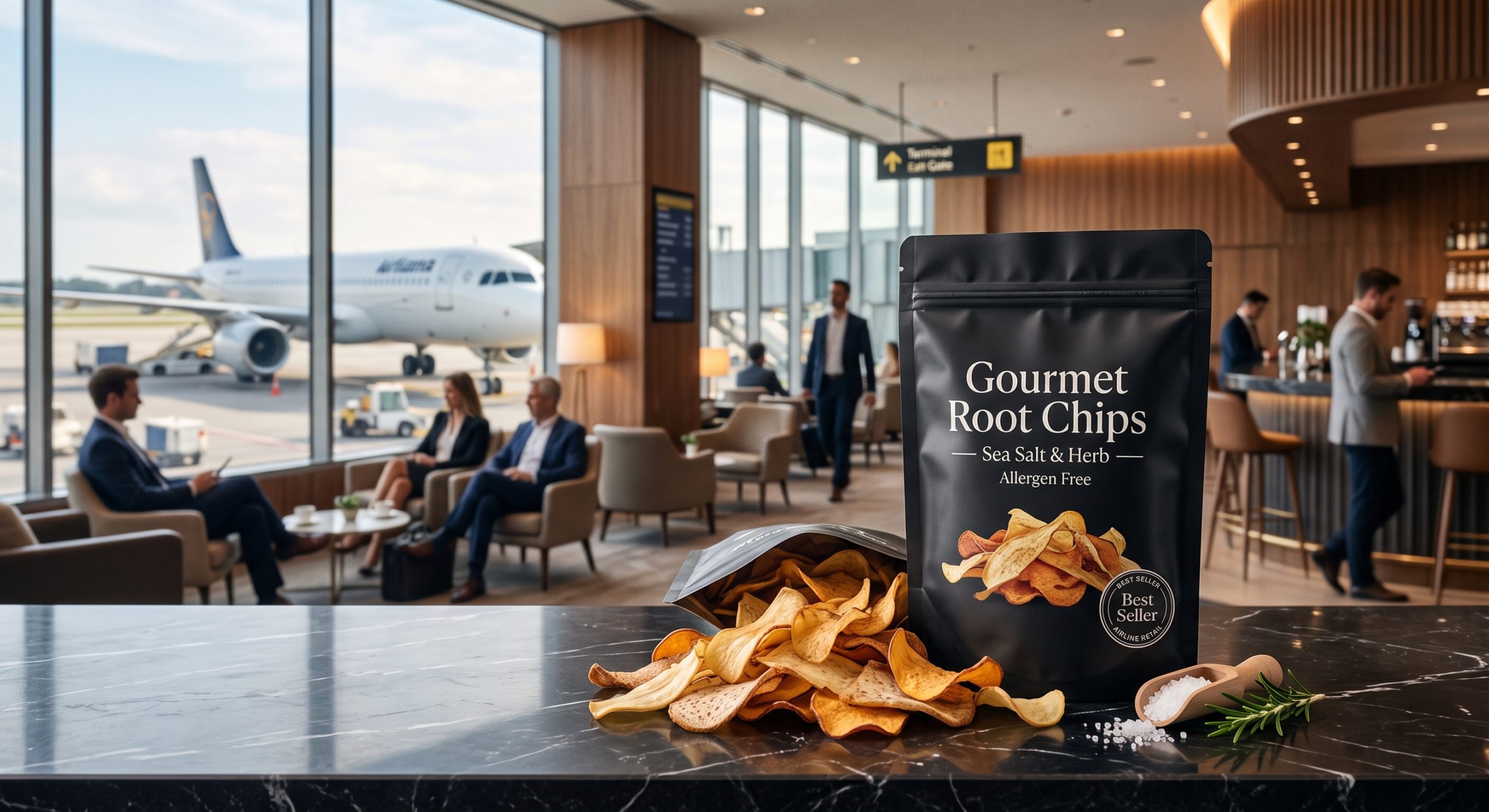
Securing a private label partner requires evaluating their ability to transition a culinary concept into a rugged, repeatable industrial process. Many snack concepts fail because they rely on unrefined formulations that cannot handle automated bagging and sealing machinery.
To avoid the financial pitfalls of poorly scaled products, procurement teams must align their sourcing strategies with proven industrial parameters. Review our comprehensive guide on Private Label Healthy Snacks: Prototype vs. Launch-Ready Assets to understand how to audit a manufacturer’s commercial readiness. Additionally, evaluating your product against a rigorous Private Label Healthy Snacks Formulation and Positioning Checklist ensures your SKU is engineered for high velocity and low return rates from day one.
For travel and hospitality procurement, allergen cross-contamination is a massive liability. Airlines and cruise lines feed thousands of captive passengers daily, making top-9 allergen-free compliance a non-negotiable requirement for onboard snack provisioning.
Gourmet root chips inherently offer a clean-label, plant-based profile. However, if the co-manufacturer processes wheat, dairy, or nuts on the same equipment, the risk of cross-contact invalidates the product for sensitive passengers. Procurement teams must demand GFSI-recognized certifications (such as BRCGS or FSSC 22000) and explicit allergen-control documentation.
By sourcing a certified gluten-free, vegan root chip, airlines can streamline their catering operations, using a single premium snack to satisfy multiple dietary requests (Celiac, Vegan, Kosher, Halal) simultaneously. Learn more about consolidating your onboard offerings in our guide to Gluten-Free Menu Management for Airline and Cruise Line Foodservice.
In specialty retail environments, securing shelf space is highly competitive. Private label root chips justify a premium price point often 30% to 50% higher than conventional potato chips through superior ingredient storytelling and front-of-pack transparency.
Instead of hiding behind generic “vegetable oil” or “modified starch” declarations, a premium private label root chip highlights sustainably sourced cassava, non-GMO high-oleic oils, and artisanal sea salt. By elevating the narrative of the raw materials, brand directors create a strong value proposition that resonates with modern, label-reading consumers. For actionable strategies on monetizing your ingredient deck, explore our analysis on using Ingredient Storytelling to Increase Retail and Amazon Value.
Launching a high-margin private label snack line requires a co-manufacturing partner who intimately understands agricultural sourcing, food science, and commercial logistics. Blue Highcrest specializes in developing and producing premium, launch-ready gourmet root chips tailored for specialty grocers, airlines, and hospitality groups.
Our turnkey private label snack solutions deliver:
Rugged Commercial Formulations: Pre-tested, shelf-stable root chip profiles optimized for automated packaging lines, high-altitude transport, and maximum crunch retention.
Vertical Supply Chain Integration: Utilizing our premium cassava and root vegetable sourcing networks to guarantee direct-from-origin pricing and uninterrupted batch consistency.
Uncompromised Food Safety: Manufactured in dedicated, GFSI-certified facilities to ensure strict gluten-free, non-GMO, and top-allergen-free compliance for flawless retail and airline audits.
Ready to upgrade your snack category with a premium, margin-positive SKU? Contact the private label development team at Blue Highcrest to request custom gourmet root chip sample kits, packaging barrier specifications, and volume co-manufacturing terms.
Root vegetables like cassava possess a denser, more complex carbohydrate matrix than standard potatoes. When correctly processed and dried, this matrix forms a tighter cellular structure that is less hygroscopic (less prone to absorbing ambient moisture), preserving the chip’s crunch for extended periods.
Nitrogen flushing displaces oxygen inside the snack pouch, halting lipid oxidation and preventing the oils from turning rancid. Additionally, the nitrogen gas creates a pressurized cushion that physically protects the fragile chips from being crushed during catering loading and turbulent flights.
Airline F&B directors typically require GFSI-recognized food safety certifications (FSSC 22000, BRCGS, or SQF), alongside specific dietary validations such as Certified Gluten-Free, Non-GMO Project Verified, and Kosher/Halal compliance to serve diverse international passenger demographics.
Yes. Blue Highcrest collaborates with brand owners to develop bespoke, clean-label flavor systems—ranging from classic Pink Himalayan Sea Salt and Cracked Black Pepper to complex regional profiles like Truffle Rosemary or Spicy Chili Lime—without utilizing artificial flavor enhancers or synthetic colors.